
Brand Logo
Service architecture

Bystronic Services for laser production cells

Service work starts before installation. The discussion covers material flow, assist gas strategy, operator readiness, cutting head protection, spare parts planning, and the reporting cadence that keeps the cell visible to production leadership.

Four service lanes

Four technical service lanes that move from quote review to daily output

Each lane has a distinct owner, checkpoint list, and handoff document so engineering, maintenance, purchasing, and operations can work from the same service map.

01

Application audit

Material families, tolerance bands, sheet utilization, edge expectations, and secondary operations are reviewed before recommending power, table format, or automation scope. This prevents a machine quote from ignoring the parts that actually drive the payback model.
02

Installation planning

Site layout, foundation load, extraction, chiller placement, safety zones, Class 4 laser controls, and operator access are checked with the same seriousness as the cutting specification. The goal is a cell that can be serviced without interrupting nearby work centers.

03

Process commissioning

Commissioning connects CNC programs, nesting rules, nozzle selection, assist gas pressure, and inspection routines. Instead of treating training as a short demonstration, the team documents what operators should verify at start-up, after material changes, and after alarms.

04

Lifecycle support

Preventive maintenance, bellows condition, protective glass, optics cleanliness, software updates, and spare part availability are turned into a recurring service calendar. The calendar gives managers a clear reason for planned downtime before quality drift appears on the shop floor.

Impact metrics

Service conversations built around measurable production outcomes

48 hr Quote review target

Technical intake can be structured around material, thickness, part family, and automation constraints.

12+ Commissioning checks

Cutting, gas, safety, software, maintenance, and operator handoff checkpoints are tracked before release.

4 Buyer groups aligned

Engineering, operations, maintenance, and purchasing see the same evidence before approval.

1 Service record

Installation notes, parts plans, and training actions become one practical reference for the cell.

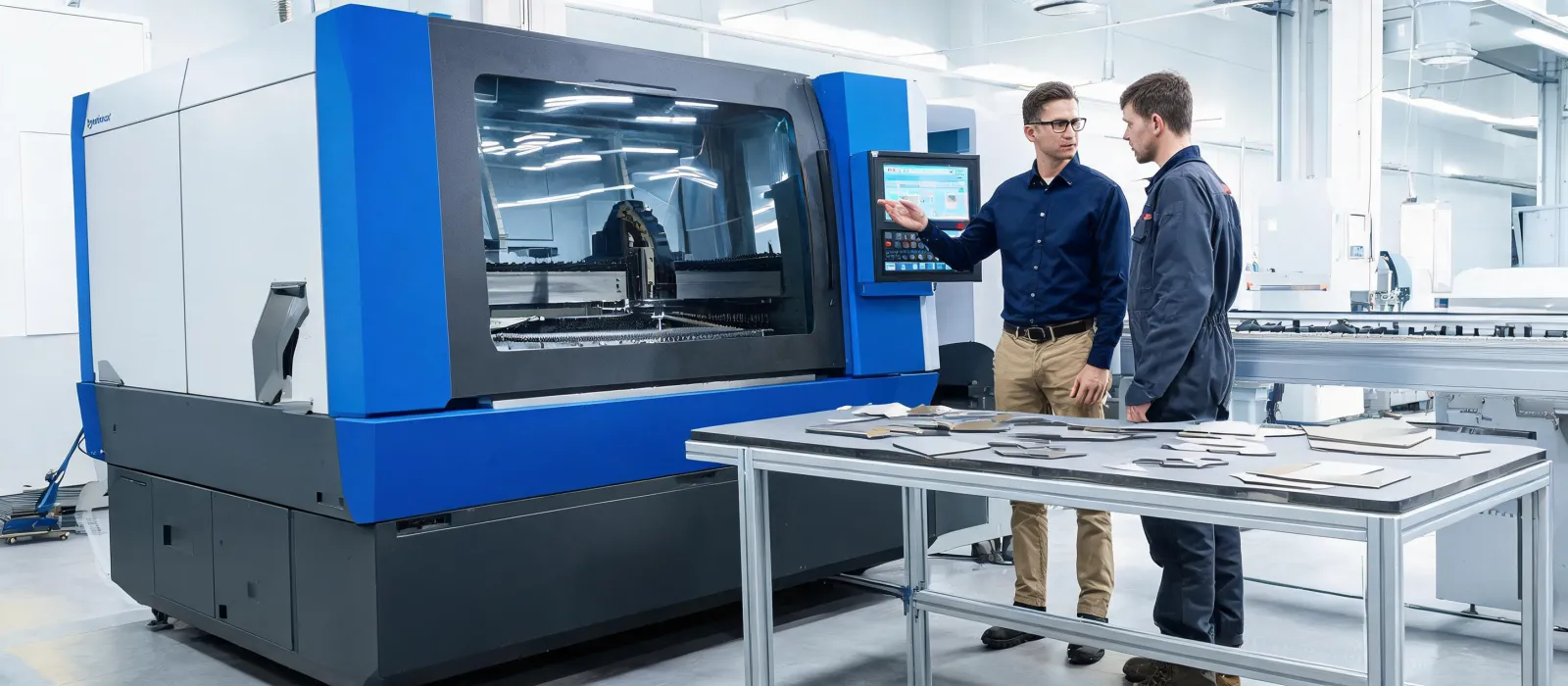
Engineer reviewing a fiber laser cutting cell with production operators
Request a service scope

Share the material mix, floor plan, and target output for a service-ready quote.

The response can cover machine class, automation choices, commissioning steps, maintenance cadence, and the questions your approval team should settle before purchase.