
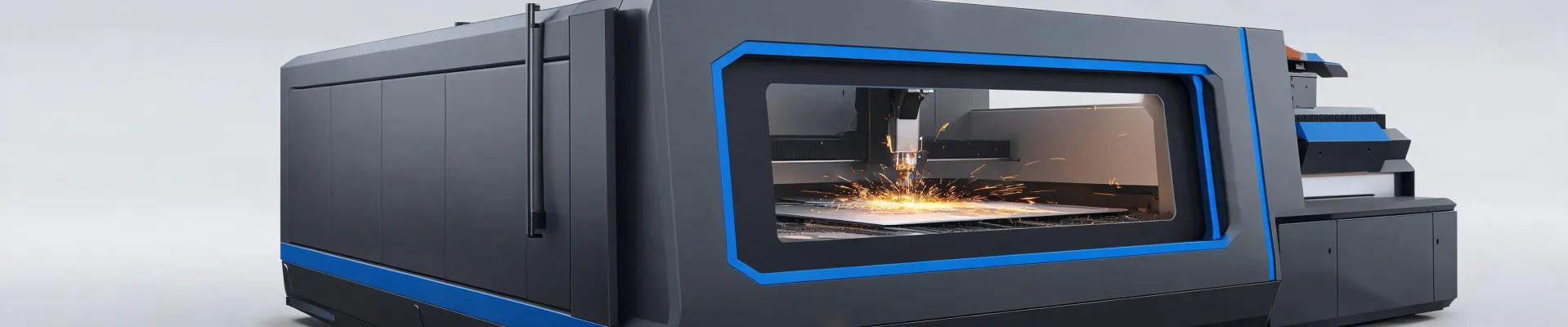
Most metal fabrication shops shouldn't buy a 10kW fiber laser. They should buy a 4kW Bystronic BySmart Fiber machine and invest the rest of their budget in material handling. I know that sounds like an oversimplification. It's not.
I've been managing procurement for a 40-person fabrication company for six years. Our annual cutting and consumables budget is about $180,000. I've tracked every invoice since 2018, compared quotes from eight vendors, and helped two other shops avoid the same mistake I almost made. So when people ask me about the Bystronic 10kW fiber laser price, I don't answer with a number. I answer with a question: What is the machine supposed to do for your business?
Why I Started With the 4kW, Not the 10kW
Everything I'd read said buy as much power as you can. The conventional wisdom is that a 10kW makes you competitive for thicker plate, future-proofs the shop, and wins more work. In practice, I found the opposite. Over 80% of the parts we cut are 3/8-inch and thinner. A 4kW fiber laser already cuts those parts faster than our welding and bending team can process them. The bottleneck isn't wattage. It's workflow.
The Bystronic BySmart Fiber 4kW fiber laser gave us enough speed to keep the operation moving without forcing us to re-engineer our power supply, our gas plan, or our maintenance budget. I still don't regret that decision for a single quarter.
Let me be clear: I'm not anti-10kW. I'm anti-fear. A 10kW system is a tool for a problem that has to exist before you buy it. If you don't have that problem yet, the price tag is just a way to buy a solution you'll need to wait for.
The Bystronic 10kW Fiber Laser Price: What the Quote Doesn't Tell You
In Q2 2024, we ran a formal comparison. The 4kW BySmart Fiber package, including installation and basic tooling, came in at $318,000. The 10kW system, with comparable options, was $492,000. That's a 54% difference before you account for anything else. (Should mention: both quotes included training, but the 10kW quote included an extra week of programming help. That's a detail that never shows up in a comparison spreadsheet.)
The sticker is not the total cost. The 10kW needed more electrical capacity. Our building had enough for the 4kW, but the 10kW quote included a transformer and service upgrade that added $18,000. The annual maintenance contract was $14,000 higher. The assist gas bill would have gone up too, because higher power on thick plate uses more nitrogen and oxygen per part. When I included the electrical upgrade and five years of maintenance, the difference was over $250,000.
I'm not saying the 10kW isn't worth money. I'm saying that if your part mix doesn't use it, you're not buying a machine - you're buying a monument to a possibility.
Per FTC advertising guidelines, performance claims have to be truthful, not misleading, and substantiated. I keep that in mind when I see 'up to 10kW' or 'cut speed increases up to 100%' in sales brochures. The right question is: at what material, what thickness, and with which assist gas? A 10kW machine might be 2x faster on 1/2-inch stainless and only 10% faster on 1/8-inch mild steel. You need a cut chart that matches your actual parts, not a headline number.
A Short Warning About 'Fiber Laser JPT' and CLX Searches
When I was first researching, I spent a week comparing 'fiber laser JPT' against other resonator brands. I nearly made a component decision instead of a system decision. JPT builds fiber laser sources, and some lower-cost machines use them. There's nothing inherently wrong with that. But a laser source is not a cutting system. You also need a rigid gantry, reliable gas delivery, accurate focus control, and software that actually nests parts efficiently. There are shops that buy a machine based on the source name and then spend months fighting edge quality because the rest of the system was weak.
Same issue happens with model names like 'CLX fiber laser.' A model designation tells you about the platform, not about your results. If you're looking at a CLX system, good. But do not compare it to a 4kW BySmart Fiber or a 10kW machine based on price alone. Compare work envelope, table load, max cutting speed at your material thickness, duty cycle, and service response time in your region.
What 'Future-Proofing' Actually Cost Us
I have mixed feelings about the word 'future-proofing.' Mixed is probably too strong. The 10kW is genuinely good. But the business case doesn't work for most shops. Part of me gets it - no one wants to install a machine and find out it's undersized. But another part remembers the shops that lose money on unused capacity.
When I said we audited every invoice, I meant it. In 2021, we added a secondary operation with 25% more capacity because we were sure a client's volume would grow. That client never grew. By the time the contract ended, we had spent $8,400 in unplanned tooling and training for a volume that didn't materialize. I still carry that lesson into every procurement decision.
The upside of the 10kW was cutting 1/2-inch stainless in one pass 40% faster. The risk was a $174,000 capital delta, higher operating costs, and a five-year note. I kept asking myself: is that speed worth potentially losing financial flexibility? In our case, no. In another shop's case, absolutely yes. That's the point - the decision belongs to your part mix, not to a spec sheet.
I went back and forth between the 4kW and the 10kW for two months. The 4kW felt responsible. The 10kW felt impressive. I ultimately chose the responsible option because the bank does not care about impressive floor plans.
How to Make the Call: A Cost Controller's Checklist
- List your three biggest part families. Not your dream jobs. Your invoiced, repeat orders.
- Ask for a cut time comparison. Have the vendor run your parts in their test room. If they won't, that's data.
- Calculate cost per part. Include power, gas, consumables, and maintenance, not just price per watt.
- Price the installation. Electrical upgrade, floorspace, crane hire, training, spare parts.
- Get the service plan in writing. In a 4kW vs 10kW decision, service response time matters more than the wattage number.
My Bottom Line
The Bystronic BySmart Fiber 4kW fiber laser is the machine I'd recommend to most shops that are taking their first serious step into automated laser cutting. If your parts are mostly 3/8-inch and under, it will do the job, hold the tolerances, and leave your cash flow intact.
And if you're wondering about the Bystronic 10kW fiber laser price, don't look at the price alone. Look at the total cost, the part mix, and the actual speed you can use. The 10kW is an excellent machine. I'm not here to talk anyone out of it. I'm here to make sure that when you buy it, you've done so because the numbers demanded it, not because a sales brochure made you feel like you were falling behind.
An informed customer asks better questions and makes faster decisions. That's why I'm sharing this. I'd rather spend ten minutes explaining what I learned than watch you learn it while signing a lease you can't cancel.
Oh, and one more thing: before you sign anything, ask the vendor to show you the service call history for the same model installed in your region. That conversation will tell you more than any '10kW fiber laser price' spreadsheet.

Jane Smith
I’m Jane Smith, a senior content writer with over 15 years of experience in the packaging and printing industry. I specialize in writing about the latest trends, technologies, and best practices in packaging design, sustainability, and printing techniques. My goal is to help businesses understand complex printing processes and design solutions that enhance both product packaging and brand visibility.