
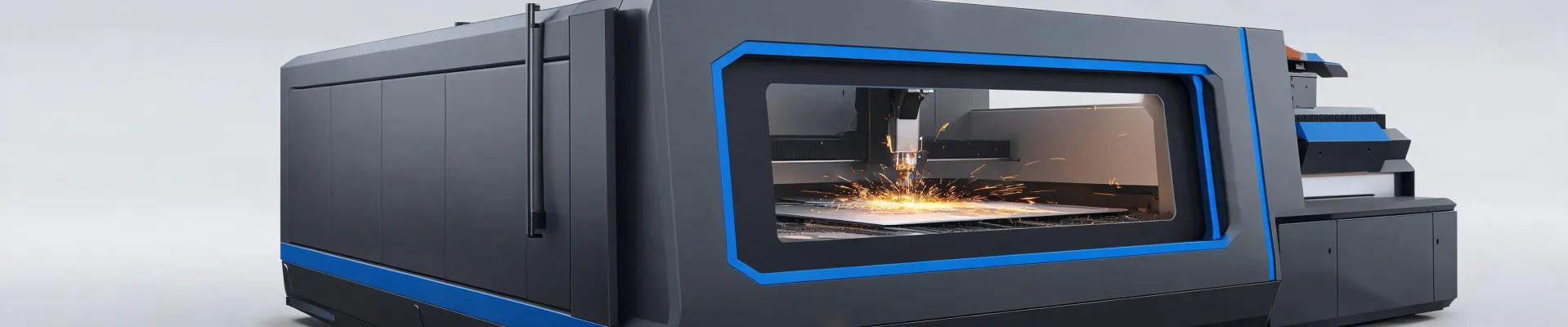
In January 2024, our maintenance lead walked into my office holding a bearing race the size of his palm. “Third one this quarter,” he said. “The old table is done. We need to replace it.” Then he put a second piece of paper on my desk. “And while we’re at it, we should get a fiber laser for the metal brackets. The subcontracted deliveries keep slipping.”
That moment started a five-month procurement process that ended with two Bystronic machines on our floor, a marking solution we originally didn’t plan for, and a TCO spreadsheet that I’ve already used twice since.
I’m the procurement manager at a 40-person architectural glass and metal fabrication shop. We make custom curtain wall units, tempered glass panels, and the aluminum frames that hold them. In 2023, we signed a contract that pushed our capacity above the ceiling. The owner gave me one instruction for 2024: fix the bottlenecks without creating a new one.
Why We Started Looking
I don’t have hard data on industry-wide failure rates for older glass cutting tables, but based on six years of tracking our maintenance spending, the old machine was dying in a slow, expensive way. We were putting about 11% of our maintenance budget into a table that was 14 years old and no longer supported by the manufacturer. (Mental note: I should turn that tracking system into a blog post one day.)
The other bottleneck was bracket production. We were sending aluminum and mild steel brackets to a subcontractor with a three-week lead time. Every delay cost us. In January 2024, I asked four vendors for quotes on both a glass cutting machine and a fiber laser cutting machine.
The Quote Comparison That Almost Ended Badly
The highest quote came from Bystronic. The Bystronic glass cutting machine was about 18% above the lowest quote for comparable specs. The Bystronic fiber laser cutting machine quote also sat at the top, mostly because I asked them not to strip out the pallet changer just to make the number smaller. I nearly moved Bystronic to a “for reference only” column.
Then I did what I tell every new hire to do before they pick a vendor: I built a TCO sheet. I listed every line item I could think of — machine price, rigging, installation, training, tooling, spare parts, software subscription, warranty exclusions, and estimated maintenance over five years.
What most people don’t realize is that initial quotes are not built the same way. The low-cost glass table option didn’t include rigging or a tooling kit. Its installation was one day. The Bystronic quote included two days of installation, two weeks of training for three operators, a spare parts kit, and a software update subscription.
After I added those pieces, the gap narrowed to about 5%. Still Bystronic. Then I estimated downtime and rework. Using three days of downtime per year for Bystronic and seven days for the low-cost option, lost contribution margin alone added roughly $9,600 per year versus $22,400. Add rework and maintenance, and the low-cost machine’s five-year TCO landed around $515,000. Bystronic came out at about $450,000.
Here’s something vendors won’t tell you: the difference between quotes often reflects what they believe you already have at home. A low number looks good until you list rigging, training, tooling, and the cost of the time you’ll lose while the machine is down.
The Marking Twist
While we were still negotiating the glass and fiber machines, the Bystronic rep asked a question nobody else asked: “Do you need to mark finished parts?”
We did. The curtain wall contract required a 2D Data Matrix code on every aluminum frame. I assumed we’d keep using the small CO2 laser marker in the corner. It was a mild CO2 laser — around 30W, good for etching glass part numbers, but not reliable on anodized aluminum tags. That’s where the decision got interesting.
The Bystronic rep then said something that changed my view of the whole vendor relationship:
We don’t make marking lasers. I can point you to two good companies, but buy the one that fits the part, not the one with our logo.
That honesty made the higher Bystronic quote easier to accept. It also forced me to learn the difference between laser marking CO2 systems and a MOPA 100W fiber laser.
Most buyers focus on wavelength and price when comparing marking machines. The question everyone asks is “which one is faster?” The question they should ask is “what material am I marking?” CO2 lasers are great for glass, wood, and coated surfaces. A MOPA 100W fiber laser is overkill for wood but dramatically better on anodized aluminum, stainless steel, and most bare metals.
We bought a MOPA 100W fiber laser from a marking specialist, not from Bystronic. It cost $28,000 including the fume extractor and the fixture for our aluminum frames. That purchase wasn’t in the original capex plan, but it was cheaper than manually labeling 8,000 frames.
What the First Eight Months Showed
Both Bystronic machines were installed in May 2024. The glass cutting table ran through the summer with the original training crew on call for the first two weeks. The Bystronic fiber laser cutting machine took over bracket production by July. The MOPA marker has been running four days a week since August.
As of January 2025, our internal cost tracker shows that the eight-month actual spend is within 3% of my TCO forecast. The new glass table’s scrap rate is 2.1 percentage points lower than the old table’s average in 2023. Fiber laser consumables are running about $1,800 per month — nozzle, lens, and protective window changes included — which is lower than the $2,200 I budgeted.
I don’t have hard data on long-term diode drift or fiber life for the MOPA after only eight months. What I can say anecdotally is that we’ve marked about 8,200 parts and have not had one unreadable code. If that changes, I’ll be the first to write a follow-up.
Three Lessons From the Exercise
First, never compare first quotes. Create a checklist of what “comparable” means before you email a vendor. If a vendor won’t quote training or tooling, assume they expect you to ask for it later and pay extra.
Second, time is a cost. Downtime, delayed installs, and slow technical responses all showed up in our TCO as real money. The machine that costs $40,000 more can still be cheaper if it saves you $5,500 per downtime event.
Third, pay attention when a sales representative tells you not to buy their product. In a market where every equipment vendor wants to sell you a complete ecosystem, the rep who points you to a specialist earns the orders that fit their line. That’s the strongest signal of trust I’ve seen in ten years of buying production equipment.
Prices mentioned here are from Q1 2024 quotes and are meant only as context. Verify current pricing and support terms with Bystronic before making your own decision.

Jane Smith
I’m Jane Smith, a senior content writer with over 15 years of experience in the packaging and printing industry. I specialize in writing about the latest trends, technologies, and best practices in packaging design, sustainability, and printing techniques. My goal is to help businesses understand complex printing processes and design solutions that enhance both product packaging and brand visibility.