
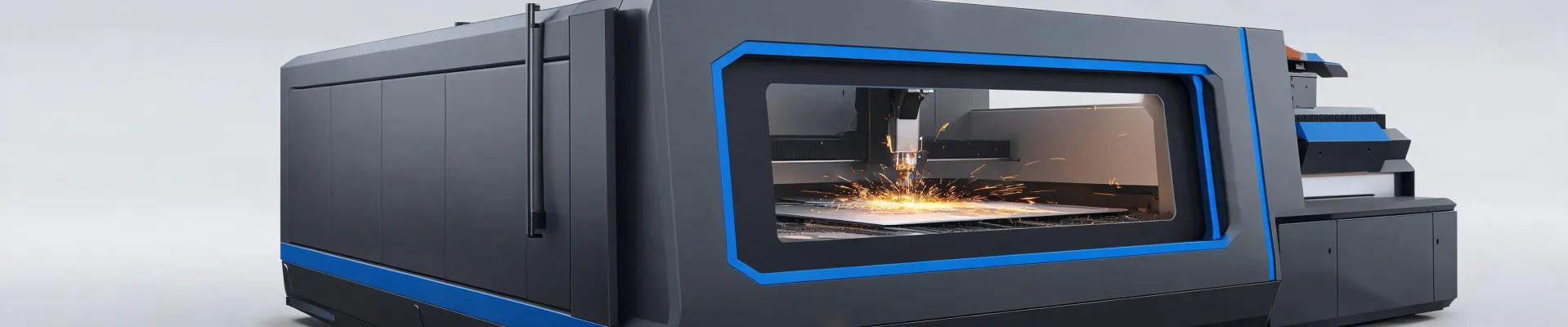
In late 2019, I had three laser cutting quotes spread across my desk, and one of them made my stomach hurt. The Bystronic laser cutting quote came in roughly 40% higher than the closest competitor. The Bystronic press brake price was worse. I leaned back in my chair and thought, "We're a 40-person fabrication shop. Who buys Bystronic at our size?"
That question was embarrassingly naive. It took six years of tracking every equipment invoice to understand why.
The Spreadsheet Before the Sale
I'm the procurement guy at a small sheet metal fabrication company. Since 2018, I've tracked every dollar we spend on capital equipment and tooling—roughly $180,000 a year. I keep a cost spreadsheet that some people call obsessive. It's how I caught a $450 "free setup" charge from a vendor in 2021. It's how I found $8,400 in annual savings by switching tooling suppliers. I trust the spreadsheet more than I trust sales reps. With good reason.
When the owner approved replacing the old punch press and adding laser cutting in-house, I did what I always do: built a comparison sheet. I called eight vendors. Four never called back once they heard our annual volume. I'm used to that. One pushed a Tekio S compactline fiber laser sheet cutter hard—the specs on paper rivaled Bystronic at 60% of the price, and I nearly bit. Two sent real quotes. And Bystronic sent a rep who asked about our parts, our shift length, our operator skill level. No other vendor did that.
(Should mention: the rep's name was Dan, and he's still our account contact. That detail matters more than it seems—it says something about how they treat customers.)
Still, the price. The Bystronic press brake price alone was nearly double the internal budget number we'd floated. I remember thinking, "What am I paying for, the blue paint?"
I was ready to write Bystronic off as another premium brand for the big shops.
The Plant Manager Who Laughed At Me
Then came the twist. I ran into a plant manager at a fabrication trade show in Chicago—I don't remember the booth, but I remember his laugh. I told him I was comparing a cheaper imported fiber laser against a Bystronic, and the cheap numbers looked too good to ignore.
"I only believed the cheap machine was a good deal," he said, "after I bought one and ate the difference."
He pulled out his phone and showed me his own tracking sheet. His budget machine broke down seven times in year one. Each callout averaged $900, plus a full day of lost production. Year two wasn't better. The longest wait for a part was eleven days. Eleven. Days.
That planted enough doubt. I went home and rebuilt my spreadsheet as a total cost of ownership model. What I mean is: not just purchase price, but every cost I could predict across a seven-year machine life.
Here's the part that changed my mind—the costs nobody puts in the first column:
- Software licensing: the cheap option charged an annual fee that was not in the purchase quote. Bystronic's base package covered more.
- Consumables: nozzles, lenses, and wear parts for the cheap machine wore out roughly two to three times faster, based on the plant manager's records.
- Training: the cheap vendor offered "basic operator training." We didn't know what that meant until other owners described it as "they showed us the on/off switch." Bystronic included a full week: programming, maintenance, edge quality troubleshooting.
- Service response: the cheap vendor's rep said "usually within a week." Bystronic committed to 24–48 hours, with remote diagnostics first.
- Energy consumption: the cheaper fiber source drew noticeably more power for the same cuts. That came straight from the plant manager's utility bills.
Once I ran those numbers, the 40% gap narrowed to single digits over seven years. The Bystronic was still more expensive upfront. But not crazy. And the more I looked, the more the gap kept shrinking.
Then Dan, the Bystronic rep, said something that has stuck with me for five years:
"People think our machines are expensive because we're a premium brand. Actually, we can charge a premium because the lifetime cost is lower. The causation runs the other way."
Let me rephrase that: it's not "expensive, therefore good." It's "good, therefore expensive." But you have to verify the good part. I do not take any sales rep's word for it—not even Dan's.
Checking the Claims (Because That's My Job)
I called three shops that actually ran Bystronic equipment. A shop in Ohio had run a Bystronic press brake and fiber laser for five years. Their answer: "Two unplanned service calls in five years. Both handled within 24 hours through remote diagnostics. That's why we bought a second one."
A shop in Texas, two years into ownership: "The software updates are boring. That's a compliment. Nothing broke after an update."
And I called Bystronic's service line directly to ask about lead times. I expected the runaround. The person on the phone answered without reading a script. That was the most impressive part of the whole process.
The cheap vendor's rep, meanwhile, told me they had "service partners." When I asked how many, and where, he went quiet. I don't have to tell you how that would have gone during the supply-chain chaos of 2020. Actually, I do not need to spell that out—I'll just say it factored into the decision.
We signed the PO in January 2020. Three weeks later, the pandemic hit. If we had bought the machine with an eleven-day parts lag and an unknown service network, we would not have survived the steel shortage. I'm not exaggerating. The Bystronic ran through everything.
What Six Years of Invoices Showed
Here is what my cost tracking system actually shows, not what a sales deck promised:
- Three unplanned service events total, across both the laser and the press brake, since 2020. Two fixed remotely. One needed a tech visit, which arrived in under 48 hours.
- About 22 hours of unplanned downtime in five years. The Ohio shop told me their previous cheap machine had more than 40 hours of downtime in year one alone.
- We still cut plenty of what I think of as "co2 laser plates"—the same stainless sheets that CO2 lasers handled for years. The fiber laser cuts them faster and uses roughly half the energy. Anyone still buying CO2 for this work has a tougher cost argument than they did ten years ago.
- The press brake has stayed within tolerance without a single recalibration outside annual service. For a machine running two shifts, that's not luck. That's engineering.
Oh, and about that small-shop concern I started with: the Bystronic compact line—the fiber laser sheet cutter for shops that do not have a 20,000-square-foot facility—fit into our existing bay with room to spare. It never acted like it was too good for a 40-person job shop. We're 64 people now. That machine is a big reason why.
A quick note on pricing, because you're gonna ask: entry-level fiber laser sheet cutters from mainstream European brands commonly quote in the $200,000–$400,000 range depending on power and automation. Bystronic's fully configured systems—with loading, tilting, and software—run higher. (Based on quotes we collected at trade shows in 2024, not for publication; verify current pricing with your local rep because steel and supply chains move everything.) The gap is real. The question is what you get for it.
What I'd Tell Another Procurement Guy
I've told this story to a dozen procurement people since 2020. The short version: the Bystronic laser cutting quote looked like the expensive choice until I tracked every dollar for six years. Then it turned out to be the cheap one.
The longer version has three lessons. First, never compare purchase price alone. Compare total cost of ownership over the machine's real working life. Your first TCO spreadsheet will have holes. That's fine. It will still be more honest than any sales sheet.
Second, the idea that "Bystronic is for big shops" is a historical leftover. It was true in the early 2000s, when Bystronic mostly built massive automated systems for automotive suppliers. That era ended. The compact line is proof. Small and mid-size shops are exactly who they're designing for now.
Third, small customers deserve real service. I will die on that hill. The vendors who ignored my calls when our annual budget was tiny are not vendors I trust now that we spend more. Bystronic treated us like a real account at 40 people. Today's small customer is tomorrow's repeat customer. That is not a slogan—it is how this shop grew.
So, if you're staring at a quote that makes your stomach hurt, do the math. Not the math in the sales deck. Your math. Your downtime history. Your hourly rate. Your honest forecast of what a machine failure costs in week three of a deadline.
The blue paint was never worth 40%. The response time was. The training was. The five-year tolerance hold was. That's what the Bystronic press brake price was actually buying. Six years of invoices say we came out ahead.

Jane Smith
I’m Jane Smith, a senior content writer with over 15 years of experience in the packaging and printing industry. I specialize in writing about the latest trends, technologies, and best practices in packaging design, sustainability, and printing techniques. My goal is to help businesses understand complex printing processes and design solutions that enhance both product packaging and brand visibility.