
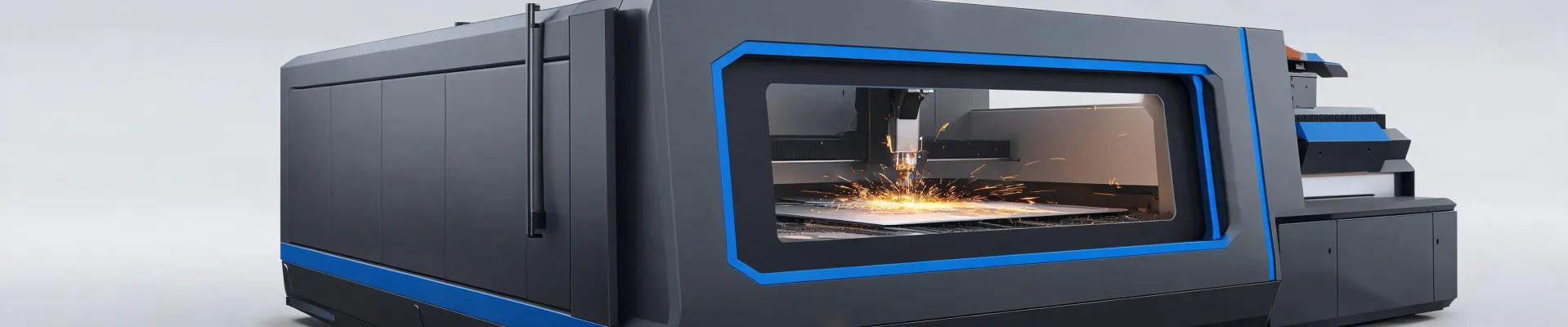
For the last four years, I've worked as a quality inspector, and I sign off on every consumable batch before it reaches the shop floor. Roughly 1,100 line items a year: contact tips, ceramic rings, lenses, slats, filters, and wiring harnesses for an automated cutting table. I don't have the easiest personality at 7 a.m. when a vendor claims something is 'within tolerance' but won't show me the measurement. That's because I've rejected about 8% of first deliveries in 2024 for missing paperwork, off-spec bores, or coating issues. And honestly, that number is better than it used to be.
So when I say the phrase 'it's just a small order' makes me flinch, I mean it. I've watched one bad batch of Bystronic machine consumables turn a tidy profit into a long afternoon of rework. The order size didn't matter. The damage was the same.
Here's my position: small orders don't deserve smaller standards. They deserve the same technical diligence, the same traceability, and often more careful attention, because the people placing them rarely have buffer stock or a spare machine to absorb a bad batch.
Why the first order is where quality hides
What most people don't realize is that a big part of the aftermarket parts supply chain is basically 'approved vs. unverified.' There are factories that make Bystronic-compatible parts under license and factories that make parts that simply look compatible. The difference isn't always visible in a photograph.
We tested a set of low-cost nozzles once, back in Q3 2023, from a source that said they were 'direct equivalents.' The overall length matched. The taper looked clean. But the bore edge radius was off by 0.05 mm, which changed gas flow enough to slow down cut speed on a 3 kW Bystronic fiber laser. The operator thought the machine was losing power. It wasn't. The nozzle was simply not doing what the geometry needed it to do.
That kind of issue is why I keep a digital caliper and a pass/fail test sheet next to the incoming goods table. It isn't paranoia. It's physics.
'Low cost' is not a quality claim
I also get asked why I'm so picky about marketing wording. Per FTC guidelines (ftc.gov), advertising claims have to be truthful and substantiated. That applies to an email quote just as much as a website banner. If a supplier says 'supply low cost flying fiber laser coder' or 'high quality fiber laser bed slats,' I want to see what 'high quality' means in numbers. Hardness. Straightness. Surface finish. Not just a picture of a shiny part.
This isn't a dig at budget products. I buy them. I just buy them with a test report.
Consider a fiber welding laser in a fabrication cell. You're asking a pulsed beam to create a stable weld pool while a robot moves the nozzle at 40 mm/s. A small variance in the gas lens can turn a clean seam into porosity. Saving $12 on a lens is irrelevant if you redo the weld, pay for filler wire, and lose the next 40 minutes of robot uptime.
Same logic for a fiber laser bed. If the slats aren't straight or the tips aren't machined properly, sheets sit unevenly. Then focus goes off, parts shift, and the nest gets ruined. Bed slats aren't sexy. They're structural. I've seen more than one overlooked slat issue blamed on 'calibration' when the real problem was a worn part that should have been replaced before it got to the customer.
The objection that misses the point
When I talk about this, a common pushback goes something like: 'We can't spend the same amount of time checking a $400 order that we spend on a $40,000 order.'
I actually went back and forth on this one for a while. On paper, the cost of verification looks fixed: someone has to open the box, measure, document. That isn't free. But the price of not checking is variable, and it's always higher than you think.
In Q2 2024, a customer's Bystronic laser was down. The OEM replacement part had a longer lead time, so the customer ordered a cheaper substitute from a local trader. I had about three hours before the machine was supposed to run the next job. There was no time to do a full dimensional test, so I went with the part number from a batch we had already verified. It was more expensive than the alternate (not that I cared about the price at that point).
In hindsight, I should have checked more carefully anyway. The verified lot was fine, but the reason the machine was down in the first place traced back to a missed maintenance interval—not a part failure. That's the thing about quality. It doesn't start at the receiving door. It starts with the habit of asking stupid questions before the situation forces you to ask them.
And this is where 'small customer' and 'strict quality' intersect. For a small shop, the margin for error is thin. A downtime event is not an annoyance; it can wipe out a month of profit. So if I buy Bystronic lasers and consumables for our own rental fleet, I want the same kind of documentation I ask from any supplier—whether I'm buying one item or fifty. The principle doesn't change with the quantity.
Why I stopped offering different standards
There was a time, roughly in 2022, when I considered splitting our approval process: 'tier A' for large accounts, 'tier B' for smaller orders. I even put together a draft flowchart for it. Then a spare parts order came in from a three-person shop that had been testing a Bystronic machine for a specific prototype. The order was $260. The email attachment with their part drawings was more detailed than anything I'd seen from a Fortune 500 procurement department.
That killed the tier idea. A small order is not a small person. It's usually the opposite: it's someone who has to think harder about every purchase because they don't have a purchasing department to hide behind. They don't ask lazy questions. They ask better questions.
So the rule now is simple: every order gets a part number, a supplier, and a verification status. If it's a new supplier, it gets a sample check. If it's an existing supplier, it gets a lot check. The order quantity changes how many units I sample—it doesn't change how much I care about the result.
Bottom line
I don't think every small order needs white-glove treatment. I do think every order needs a baseline. If you're a small shop, don't apologize for asking for specifications, test reports, or traceability. Those are not unreasonable demands. If you're a supplier, don't hide behind 'low cost' or 'compatible' when a customer asks what exactly they're getting.
The next time someone says 'it's just a small order,' remember: that small order is someone's reputation. If you help them protect it, they'll bring you a bigger one.

Jane Smith
I’m Jane Smith, a senior content writer with over 15 years of experience in the packaging and printing industry. I specialize in writing about the latest trends, technologies, and best practices in packaging design, sustainability, and printing techniques. My goal is to help businesses understand complex printing processes and design solutions that enhance both product packaging and brand visibility.