
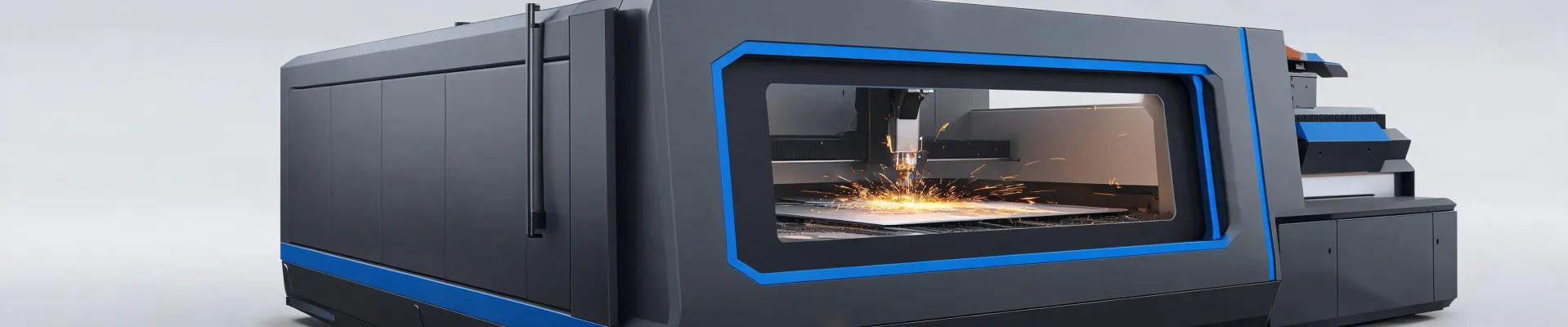
I'm the guy who gets called when a laser cutting line is down and a customer's deadline has gone from "comfortable" to "our plant manager is watching the clock." In my role coordinating emergency parts for industrial fabrication, I've handled more than 200 rush orders over eight years. Some were straightforward. Some ended in parking-lot meetings. But all of them taught me the same lesson: a low quote with hidden fees isn't a bargain—it's a ticking clock. The quote that shows every cost upfront, even if it looks higher, is the one that will save you money and keep your sanity.
That's not an opinion I arrived at by reading a blog. It's a conclusion from watching $900 quotes turn into $1,275 invoices, from seeing promising deliveries arrive three days late, and from comparing my data across dozens of vendors. The "cheap" option rarely is. And in emergency situations, trust is worth more than a discount.
The Bellow That Broke the Cheap Quote Illusion
In March 2024, a client called at 10am on a Tuesday. They needed a replacement bystronic bellows for laser cutting—the accordion-shaped protective cover that keeps metal chips and debris out of the linear guides on a Bystronic cutting table. Their maintenance crew had noticed it dragging the night before. By 7am, the line was down. Normal lead time for this part: six days. They had 36 hours before a $50,000 penalty kicked in on their own customer order.
We did the usual triage. I called three vendors and asked for quotes with expedited shipping options. Vendor A came back at $900, "free ground shipping." Vendor B quoted $1,050—all-in, itemized, with a guaranteed overnight truck. Vendor C never returned my call. The client's purchasing manager went with Vendor A. I couldn't blame him; the price was lower, and the phrase "free shipping" sounded good.
The next 30 hours were a masterclass in hidden costs. Vendor A's "free ground shipping" didn't apply to rush orders. The actual freight charge: $180. Then there was a $75 "expedited processing fee" we weren't told about until the invoice. Then a $120 "after-hours coordination surcharge" because the part was pulled from a different warehouse after their normal shift. Total: $1,275. And the part? It didn't arrive in time. Ground shipping meant ground shipping—four days, not one. The client's line stayed down, the penalty clause activated, and their own customer got the delay, not us.
The most frustrating part? Vendor B had the bellows in stock, at another warehouse two hours away, and would've delivered it overnight. For $1,050. That's a $150 difference on the base quote. But the real gap was $225 in surprise fees and a $50,000 penalty. The cheap quote cost them over $12,000 in total. When I explain this story to clients now, I use it as the definition of a false economy.
The Data Confirms It: Hidden Fees Are Bad for Everyone
After that incident, I started tracking every rush order I processed. Not just quantities—pricing models, final totals, on-time performance. I needed to know if Vendor A was an outlier or a pattern.
Last quarter alone, we processed 47 rush orders with 95% on-time delivery. I compared vendors who quoted a clean, all-in number with those who quoted low and added fees later. The results were stark: hidden-fee vendors averaged 32% more in total cost, even before considering the cost of delays. They were also late twice as often as transparent vendors. Not because they're inherently bad people—because their business model incentivizes them to win on the base quote and make up the difference after you're committed. And once you're committed, you have no leverage.
When I compared rush orders with hidden fees vs. transparent quotes side by side, the difference wasn't just financial. The hidden-fee vendors also generated more of the chaos that late deliveries produce—expedited replacements, customer complaints, and those awful weekend phone calls. Transparent vendors were calm. They didn't need to hide anything. So they didn't.
This is the contrast insight I wish I'd had years ago: a quote is a contract, and every omission is a potential landmine. If a vendor can't show me the real number upfront, what else aren't they telling me about their quality, their inventory, or their commitment to a deadline?
Trust Has a Regulatory Anchor, Too
If you think my perspective is just anecdote, there's a reason the Federal Trade Commission exists. Per FTC guidelines at ftc.gov, advertising claims must be truthful and not misleading. That's not a philosophical talking point—it's the law. A vendor who quotes a price knowing that mandatory fees will add 25% on top is arguably engaging in a misleading practice. The FTC also requires that endorsements reflect typical results, not the best-case scenario. I'd argue the same should apply to vendor quotes: price should reflect what you'll actually pay, not a fantasy number.
Even the USPS understands this. According to USPS pricing effective January 2025, a First-Class Mail letter costs $0.73. That's the price. There isn't a $0.50 processing fee discovered at the counter or a "letters between 8 and 9am" surcharge. They publish the rate, you pay it, it's done. Using USPS as an example in an article about laser parts feels funny—but the principle is exactly the same: clear, upfront pricing builds trust. Surprises destroy it.
I know what you're thinking: "But this isn't a letter, it's an industrial quote. There are variables." Yes, there are. But variables can be explained before the quote, not used as a way to inflate it later. Shippable items have freight rates. Expedited orders have rush fees. If the vendor can't estimate them at quote time, they shouldn't be quoting. Period.
The "Cheap First" Trap (And How to Spot It)
Some buyers will read this and think, "That's all well and good, but I'm still going to take the lowest number and fight the surprises later." I've done that. It doesn't work. When you're in an emergency, you don't have time to fight. You need the part to arrive while the line is still idle and the deadline is still breathing.
And this trap isn't limited to Bystronic parts. It applies to any expensive equipment or critical spare. I've seen people search for "laser bystronic 2017 prezzi" hoping to score a used Bystronic laser at a bargain price. The base price looks great—until you factor in installation, training, missing safety guards, and the cost of bringing a decade-old system up to today's standards. The same rule holds for a Rockwood plasma cutter or a used CO2 laser coder. If the quote doesn't show every line item, the price isn't real.
My sample is limited to industrial equipment and emergency parts. I can't speak to buying pens or t-shirts in bulk. But if you're in a world where an unexpected delay costs more than the part itself, you need a vendor who treats transparency as a feature, not a burden.
There's something satisfying about a vendor who lists all fees upfront. It might look boring compared to the flashy low quote. But after the part arrives late, the invoice balloons, and the line finally restarts—the boring quote is the one that gives you peace of mind. You don't feel like you got lucky. You feel like you made the right call.
So here's my rule, and I'm not going to soften it: show me every cost before I commit. If I see a low number with fine print, I walk. I'd rather pay a known $1,050 than a mystery $900. Because the true price is the price you pay after all the surprises—and the vendor who counts on that surprise isn't worth the risk.

Jane Smith
I’m Jane Smith, a senior content writer with over 15 years of experience in the packaging and printing industry. I specialize in writing about the latest trends, technologies, and best practices in packaging design, sustainability, and printing techniques. My goal is to help businesses understand complex printing processes and design solutions that enhance both product packaging and brand visibility.