
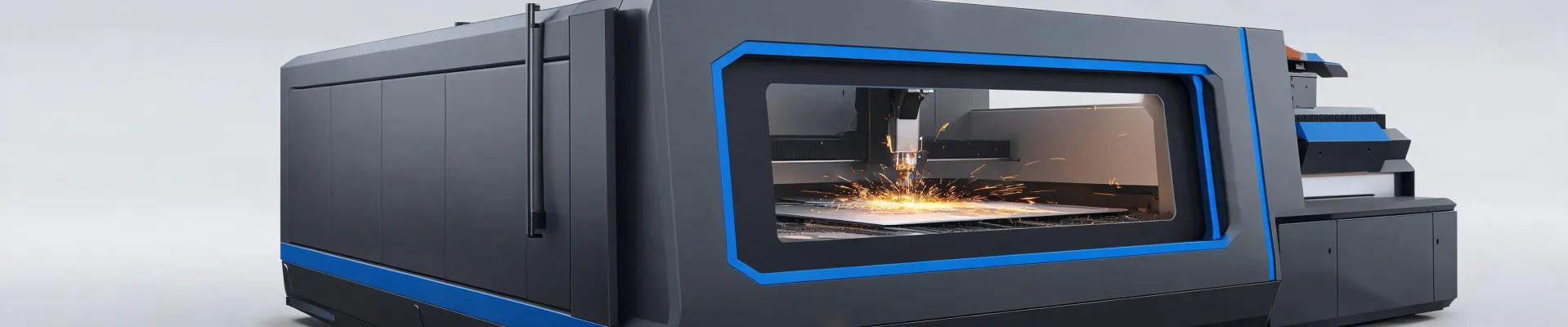
I'm a quality and compliance manager at a metal fabrication company. I review every laser cutting system we take on—roughly 40 installations in the last six years. When someone asks me whether they should buy a Bystronic laser cutting system, my honest answer is "it depends." Not because I'm being diplomatic. Because it genuinely does.
Bystronic machines are well built. The ByStar Fiber series, in particular, has a reputation for beam quality and consistent cutting speed. But "well built" doesn't mean "right for your shop." I've seen shops overbuy and waste money on capabilities they're not using. And I've seen shops underbuy, hit a throughput ceiling a year later, and end up buying a second machine sooner than they planned.
So let me walk you through the three scenarios I see most often. If you can figure out which one you're in, you'll know what questions to ask—and, just as importantly, what details to verify once the machine is on your floor.
Scenario One: The Small Shop Taking Its First Step into Laser
Maybe you're running a job shop that's been doing plasma cutting or manual fabrication. You've got customers asking for tighter tolerances, thinner materials, and better edge quality. You're wondering if now is the time to invest in a Bystronic laser cutting system—but the price tag makes you nervous.
The good news: Bystronic doesn't only build massive, fully automated production lines. Their entry-level fiber machines are still serious pieces of equipment. The bad news: a laser cutter isn't like buying a new press brake. You're also committing to gases, optics maintenance, software training, and, most importantly, service support.
This is where I sound like a broken record: check the service contract before you get excited about cutting speed. I know, it's not glamorous. But in 2023, I inspected a system for a shop that saved 12% on the machine price by working with a gray-market dealer. When the cutting head failed in week three, that dealer's response time was seventeen days. Not seventeen hours—seventeen days. That's the difference between a minor hiccup and a full production stoppage.
Don't get me wrong: I'm not saying every small shop needs a factory-direct service plan. But if you're buying a Bystronic, even a used one, make sure the seller's support capacity matches your actual production reality. If you're a one-machine shop, a week of downtime can wipe out a quarter's worth of margin.
Something else I've noticed over the years: pay attention to how you're treated when you're making a small first order. When I was starting out, the suppliers who took my $200 optics orders seriously were the ones I stayed with for $20,000 machine purchases later. A vendor that rolls its eyes at a small trial order probably won't respect you when you need urgent support either.
And if you're searching for a "bystronic laser cutting system" because you're starting out on a tight budget—consider whether a new machine is really the right move. A well-maintained used system with a documented service history can be a solid entry point. Just budget for a thorough optics inspection from day one. More on that below.
Scenario Two: Upgrading from Punching or Plasma
Here's the most common situation I see: a mid-size manufacturer with existing stamping or plasma cutting capacity decides it's time to move into fiber laser cutting. They've got contracts that need tighter tolerances, or they're chasing new markets that require it.
If that's you, don't let the sales conversation start and end with the laser source. Ask about the integration. How does the machine handle material loading? Is there an automated storage option? What does the maintenance cycle for the optics actually look like? These decisions determine whether this machine becomes a profit center or a permanent source of headaches.
The thing that surprises a lot of people in this scenario: fiber laser welding aluminum is not the same as cutting it. I've been through this with multiple shops who assumed their new laser cutting system would double as a welding station. Cutting aluminum with a fiber laser is well established. Welding it reliably requires completely different beam parameters, a different gas setup, and honestly, a much more careful operator. If your goal is to weld aluminum, don't buy a cutting system and expect it to weld. It won't. You'd be looking at a separate welding solution—Bystronic offers those, but it's a different purchase altogether.
Also: verify with actual sample parts. When I evaluate a system for a client, I don't just run a test piece. I cut their part, from their material, on their program. That's the only way to confirm the machine holds tolerance for your work. In Q2 2024, I supervised a test where the vendor's demo piece looked beautiful. Our actual production part? The kerf width was off by 0.15mm on thin galvanized sheet. The vendor said it was "within industry standard." We said no, and they redid it at their cost. That 0.15mm was unacceptable for the application, and we caught it before signing the final acceptance, not after.
Scenario Three: You Already Own a Bystronic—and Now You Need Optics
This is where the search phrase "bystronic optics for sale" starts to matter. If you already own a Bystronic cutting system, eventually you'll need replacement optics: focusing lenses, protective windows, maybe a whole cutting head. When that day comes, the question is always: OEM parts or third-party alternatives?
I'll be straight with you. I've tested both. There are third-party optics that perform reasonably well, and there are some that are borderline dangerous. The difference isn't always visible to the naked eye. In 2024, we tested a batch of third-party protective windows ordered online (six pieces from a supplier I won't name) and found that two of them had coating defects that cut laser transmission efficiency by roughly 15%. That's not just a quality issue—it's a fire risk and a safety issue. Damaged or miscoated optics can scatter beam energy inside the cutting head, and that's how you get component failures that cost far more than the optics themselves. Under ANSI Z136.1 laser safety guidelines, the machine's protective housing is supposed to contain that risk. But why rely on that when you can test the part first?
So here's what I recommend to anyone sourcing Bystronic optics from any supplier:
- Ask for the coating specification in writing—transmission percentage, absorption coefficient, and the base material supplier.
- Require a certificate of conformance. Not a generic "quality certificate"—a document showing actual test data for your specific batch.
- Test on a sacrificial piece first. Don't install a new optic and immediately run a paying job.
- If the price is dramatically lower than the OEM part, that's a red flag, not a bargain.
I don't have hard data on what percentage of shops buy third-party optics. But based on what I've seen in the field, I'd guess it's somewhere around 30–40% at some point in the machine's life. If you're one of them, at least do the verification steps above. A $200 saving on optics is not worth a $20,000 risk to your laser source.
If You're Searching for "Eye CO2 Laser" or "CO2 Laser Levels"
You might have landed here through a search for "eye co2 laser" or "co2 laser levels." Quick heads-up: those terms usually refer to medical and ophthalmological devices used for procedures like eye surgery—a completely different industry from the industrial CO2 and fiber laser cutting systems Bystronic makes. If that's you, you're not wrong; you're just in the wrong corner of the internet. You're probably looking for medical device suppliers. Still, if you're curious about industrial laser cutting while you're here, feel free to look around.
So Which Scenario Are You In?
Here's a simple way to tell:
If you're buying your first laser cutting system and the cost of entry is your main concern, you're in Scenario One. Prioritize service, training, and secondhand quality over top-line cutting speed. A machine is not a jewel to admire—it's a production tool to keep running.
If you have an existing fabrication business and you're trying to move upmarket—or you're getting customer requests you can't fulfill with punch presses—you're in Scenario Two. The material handling integration and your operator's skill curve matter more than the brand of the laser source.
If you already own Bystronic equipment and you're shopping for replacement optics, you're in Scenario Three. Verification beats price, every single time. Get the specs in writing, have the part tested, and remember that the cheapest option is rarely the cheapest once you factor in downtime.
One more honest caveat: my experience is based on mid-sized shops in the 5–200 employee range. If you're a massive multinational running 24/7 shifts, your risk tolerance is different. You probably should be negotiating a full OEM maintenance contract and a premium service package. But for everyone else, the principle still holds: know your scenario, verify everything, and don't let a big-name machine make you forget the fundamentals.
There's something satisfying about watching a Bystronic system nail a perfect cut on a part a customer swore was impossible. I've seen that moment more than a few times, and it almost always follows embarrassing amounts of planning, boring checklists, and someone like me poking around the machine with a caliper. Do the boring parts well, and the satisfying part takes care of itself.

Jane Smith
I’m Jane Smith, a senior content writer with over 15 years of experience in the packaging and printing industry. I specialize in writing about the latest trends, technologies, and best practices in packaging design, sustainability, and printing techniques. My goal is to help businesses understand complex printing processes and design solutions that enhance both product packaging and brand visibility.