
There's No 'Best' Laser Cutter—Only the Right One for Your Situation
When I first started managing equipment purchases for our manufacturing facility, I assumed the highest-spec system was always the best choice. More power, more automation, more features—how could that be wrong? A $500,000 procurement mistake later, I learned that the 'best' laser cutter depends entirely on your production mix, budget, and growth plans. (Note to self: never skip the needs assessment phase again.)
The problem is, most advice out there tries to give you a single answer. But a factory running 24/7 production on thick stainless steel has completely different needs than a job shop handling mixed materials, or a startup testing the waters with their first system. So let's break this down by the three most common situations I've seen—and what I'd recommend for each.
Quick overview of the three scenarios:
- Scenario A: You're looking to cut thick metals (up to 1 inch) with high throughput and consistent quality
- Scenario B: Your budget is tight and you're considering CO₂ lasers as a 'cheaper' alternative
- Scenario C: You're already invested in a specific laser platform and wondering if Bystronic can replace it
Scenario A: Handling Heavy-Duty Production Runs
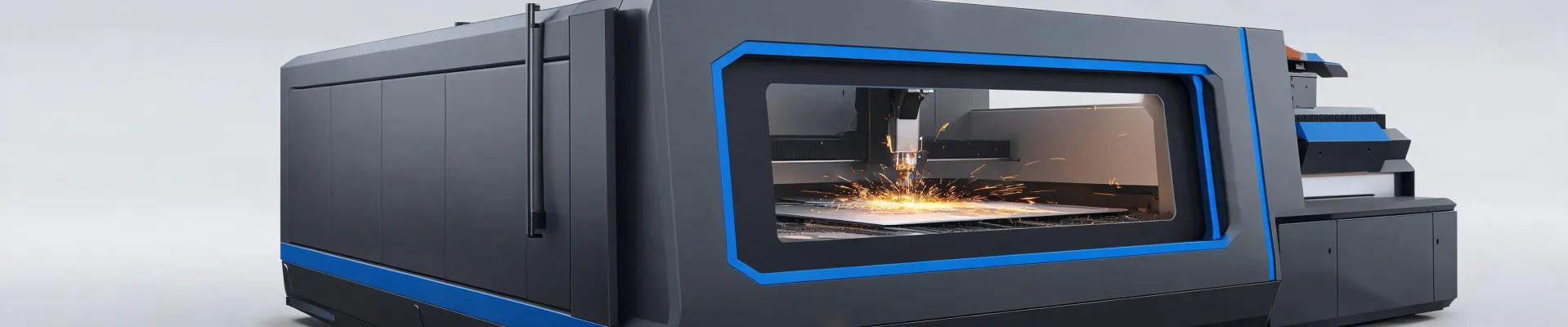
If your operation processes thick metals daily—say, 3/8-inch stainless steel or 1-inch mild steel—then Bystronic's fiber laser systems are worth a serious look. The surprise for many shops isn't the cutting speed (fiber lasers are fast). It's the automation integration that changes the game.
In our facility, we upgraded to a Bystronic ByStar Fiber 10kW system in Q3 2024. I never expected the biggest time-saver to be the automated material handling. The tower storage system and sheet loader cut our part-to-part time by 40%. The laser itself is fast, but the real productivity gain came from eliminating manual sheet loading between jobs.
Here's what I'd recommend if you're in this scenario:
- Don't just compare kW ratings. A 6kW fiber laser with good beam quality can out-cut a poorly integrated 10kW system. Bystronic's ByVision software and beam delivery are industry benchmarks.
- Test your actual parts. We ran a trial with Bystronic's application center. Cutting time dropped from 14 minutes to 8 minutes per part—that's a 43% gain. The $3,000 trial cost was justified by the data.
- Factor in total cost of ownership. Fiber lasers use less electricity, no gas assist for thin materials, and require less maintenance than CO₂. Our energy savings alone are ~$8,000 per year.
My perspective: if you're producing more than 500 thick-gauge parts per month, the premium for a Bystronic system pays back in under 18 months. The first-year payback is aggressive, but I've seen it happen.
Scenario B: Budget-Conscious, Considering CO₂ Lasers
I've had this conversation too many times: a shop manager says, 'I see CO₂ lasers are cheaper. Why not go that route?' The answer isn't always straightforward.
CO₂ lasers (like the Full Spectrum Laser P-Series 36x24 mentioned in your search) typically cost 30-50% less upfront than a comparable fiber system. They're excellent for non-metals—acrylic, wood, plastics. But for cutting metals above 16-gauge, fiber lasers are significantly more efficient.
Last year, a client called me needing help with a rush order. They'd bought a CO₂ laser for $35,000 (this was back in 2022) thinking it could handle mild steel up to 1/4 inch. The cut quality was poor, edge dross was excessive, and production time was triple what they'd quoted the client. They lost the $12,000 contract and damaged their reputation with a key account. (I should add: they upgraded to a Bystronic entry-level 2kW fiber system 6 months later, at $120,000.)
If your budget is tight, here's my honest advice:
- Start with a used Bystronic fiber system. Certified pre-owned units from Bystronic Direct come with a warranty and support. Save 30-50% vs. new.
- Consider financing. Bystronic offers leasing. A $120,000 system at 5-7% over 5 years is about $2,300/month—less than the cost of one failed rush order.
- Don't buy a CO₂ laser for metal. Unless you're only cutting very thin sheet metal (up to 14-gauge) at low volumes, the operating costs (gas, electricity, consumables) and slower speeds erase any upfront savings.
In my opinion, the 'budget-friendly' path that leads to repeat business is investing in the right tool for your material mix. A $25,000 CO₂ laser that can't do the job is $25,000 wasted. A $100,000 fiber system that doubles your throughput is a business asset.
Scenario C: Evaluating Bystronic vs. Your Current Platform
Maybe you're already using a Full Spectrum Laser or another CO₂-based system, and you're wondering if Bystronic's fiber technology would be a better fit. This is common among shops that started with general-purpose lasers and have outgrown them.
The surprise for many is not just the speed difference. It's the reliability of the process. With our previous CO₂ system (a generic Chinese import), we'd lose 2-3 hours per shift to tube alignment, gas refills, and optics cleaning. The Bystronic system runs for weeks with minimal intervention—we've gone 30+ days without an unscheduled stop. That predictability changes your scheduling and quoting.
From my experience, here's a practical comparison:
Bystronic fiber vs. typical CO₂ laser for metal cutting:
- Speed: 2-3x faster on 14-gauge steel
- Edge quality: Consistent, minimal dross (especially on thin materials)
- Consumables: No laser gas, fewer optics to replace
- Software: ByVision is notably better than generic Chinese controllers
- Support: Bystronic has a global network; I've waited 4 weeks for a Chinese vendor's part
But—the investment is real. A Bystronic BySmart Fiber 2kW starts around $80,000 for a basic system. A comparable CO₂ laser might be $30,000. The question is: what's your time worth?
Our facility's calculation: at $120/hour shop rate, every hour saved is $120 profit. If the fiber laser saves you 15 hours per week (typical for a job shop), that's $1,800/week or $93,600/year. Payback in under 12 months. (Numbers are approximate—verify with your own rates.)
How to Decide Which Scenario Applies to You
If you're still unsure, here's a quick decision guide:
Go with Scenario A if: You cut thick metals (3/8"+) consistently, have high volume (>500 parts/month), and automation is a priority.
Go with Scenario B if: Your budget is under $50,000 and you mainly cut non-metals with occasional thin metal. Consider used industrial fiber if you do regular metal work.
Go with Scenario C if: You already own a CO₂ laser system and are hitting limits on speed, edge quality, or reliability.
And if none of these fit exactly? Well, that happens. The key takeaway is: invest time up front to match the technology to your actual production mix. A 2-day application trial can save you from a 5-year mistake.
Prices as of early 2025; verify current rates with Bystronic or an authorized dealer. Every shop's numbers will vary—do your own math.

Jane Smith
I’m Jane Smith, a senior content writer with over 15 years of experience in the packaging and printing industry. I specialize in writing about the latest trends, technologies, and best practices in packaging design, sustainability, and printing techniques. My goal is to help businesses understand complex printing processes and design solutions that enhance both product packaging and brand visibility.