
-
Step 1. Define the job, not the model
-
Step 2. Get an itemized quote, not a ballpark
-
Step 3. Put the total out-the-door cost in writing
-
Step 4. Verify service, spare parts, and consumables
-
Step 5. Plan facility and fume extraction before you finalize
-
Step 6. Use your size as an advantage
-
Common mistakes I still see
Most people start a machine purchase by searching for 'Bystronic press brake price' and hoping for a simple number. I understand. I also know that a useful number doesn't exist until you define the work. I am an office administrator for a 40-person contract manufacturing shop. I manage the purchasing side of the business: roughly $1.8 million a year across vendors, from cutting consumables to capital equipment. This checklist is for small and mid-size shops that do not have a full-time purchasing department. There are 6 steps. Step 5 is the one most people skip.
Step 1. Define the job, not the model
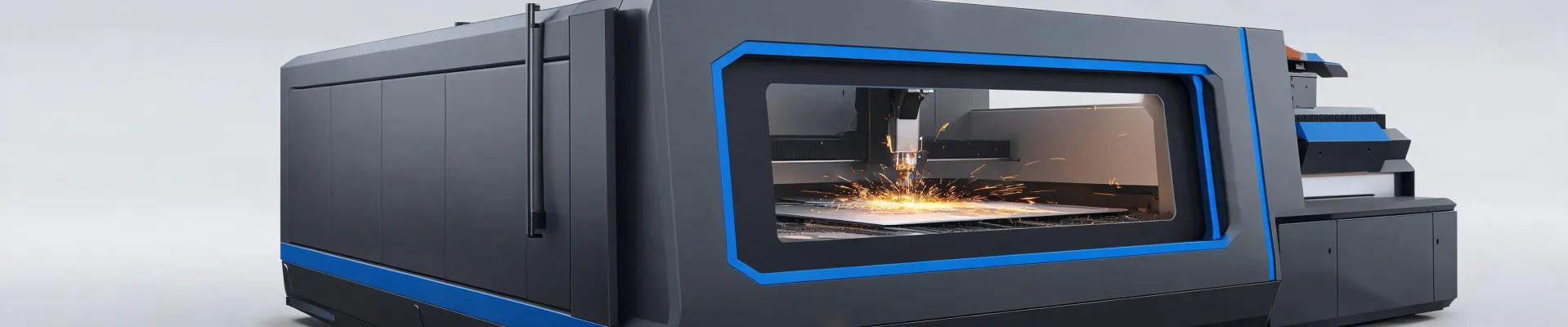
Before you ask for a Bystronic BySmart Fiber 4kW fiber laser quote, ask yourself what the machine has to do. What material will you cut? What thickness range? What part size? What edge quality does your customer expect? How many sheets per shift?
A Bystronic BySmart Fiber 4kW fiber laser is a good machine in its class. But the model is not a specification. If your work is mostly 3 to 6 mm steel or stainless, a 4kW fiber system is in the right range. If you need to process thicker plate or high volumes of thin material, the right machine may be a different power or a different setup. And if you are coming from a 10W fiber laser marking machine, please understand that those are marking systems, not sheet-metal cutters. Searching for '10W fiber laser' when you mean a 4kW cutting laser is comparing a drill to a lathe. They are both 'lasers,' but the capability gap is enormous.
Step 2. Get an itemized quote, not a ballpark
Bystronic press brake price depends on tonnage, bed length, axes, backgauge, tooling, software, and options. A laser system depends on laser power, cutting head, chiller, gas control, fume extraction interface, and any automation. The only safe way to compare quotes is line by line.
Ask for a written breakdown: base machine, tooling, shipping, installation, training, commissioning, and spare parts. If a quote says 'tooling included' without a list, ask for the list. I remember comparing two quotes for the same type of machine. One looked cheaper by $12,000 until I saw that installation and commissioning were left out. When I added them back, the 'cheaper' quote was actually $4,000 more. Let me rephrase that: a cheap quote with vague scope is the most expensive option in the end.
Step 3. Put the total out-the-door cost in writing
Once you have an itemized quote, ask for the total out-the-door cost. That includes freight, taxes, payment terms, utility connections, and anything the salesperson says is 'minor.' If a number is not in the proposal, assume it is not included.
Also get the delivery date in the purchase order. A lead time like 'around 12 weeks' is not a commitment. I want to say we once planned around an 'estimated' delivery that slipped by almost three months, but I might be misremembering the exact delay. The painful part was real: we lost a production slot and had to run the job on an older machine. Get the supplier to define what happens if delivery slips. You may not get a penalty clause, but you will get their attention.
And if you think written confirmations are optional, they are not. I knew I should get written confirmation on the payment terms, but I thought 'we have worked together for years.' That was the one time the verbal agreement got forgotten, and finance rejected an invoice because it did not match the PO. The machine was fine. The paperwork made everyone miserable.
Step 4. Verify service, spare parts, and consumables
A machine is not just a machine. It is a maintenance relationship. Ask the supplier: How many service techs are within a reasonable drive? What spare parts do they stock in your country? What is the target response time for a breakdown? What do preventive maintenance visits cost? Does the warranty cover travel time and mileage?
If you are keeping an older CO2 laser running while the new fiber system is being installed, plan for that separately. CO2 laser regulator kits, gas supply, optics, and nozzle consumables are operating costs, not part of the new capital quote. Some buyers try to bundle them into a new equipment purchase and then lose the line item in negotiations. Keep the lists separate.
Personally, I prefer suppliers that answer these questions without making me feel like an inconvenience. If a salesperson acts annoyed by a small customer's questions, imagine how they will act six months later when you need a spare part.
Step 5. Plan facility and fume extraction before you finalize
This is the step most people skip. The machine has to sit somewhere, and that somewhere needs power, air, floor strength, and ventilation. Ask for a facility checklist from the supplier, or build one yourself: electrical amperage, compressed air capacity, exhaust requirements, chiller location, crane access, and door size for machine delivery.
If you are replacing a plasma cutting table, you may have searched for 'plasma cutter dust' and already know that dust collection is not optional. But don't assume a plasma dust collector works for laser fume. Plasma dust is heavier and coarse; laser fume is much finer, and it varies by material and coating. If your new Bystronic laser is cutting coated mild steel, stainless, or aluminum, the fume extraction and filter media have to match the work. Get a separate quote for the extraction system and safety interlocks. Most machine suppliers will give you an interface specification, but the extraction equipment is often sold separately.
This is also the time to think about operator safety. Under IEC 60825-1, a 4kW fiber laser is a Class 4 laser product. That means the system has to include proper enclosure, interlocks, and beam containment. If the supplier cannot explain how the machine meets laser safety requirements, that is a red flag. I am not a safety engineer, but I have learned to ask before I sign, not after installation.
Step 6. Use your size as an advantage
Small and mid-size companies sometimes get treated like they are not worth the effort. I disagree. The vendors who treated my small orders seriously are the ones I still use for large orders. Small doesn't mean unimportant. It means potential.
When you negotiate, don't just push back on price. Ask for things that matter to a small shop: a spare parts kit for common consumables, training for two operators instead of one, a follow-up remote session after the first week, and after-hours phone support during commissioning. A good supplier will say yes to at least one of these. A supplier that says 'that is only for corporate accounts' is telling you what future service will look like.
Small doesn't mean unimportant. It means potential.
Common mistakes I still see
First, comparing the wrong machines. A 10W fiber laser and a 4kW fiber laser are both 'fiber lasers,' but one is for marking and the other is for cutting. If you quote the wrong class, you will either underpay and get no production, or overpay for capability you cannot use.
Second, assuming 'same specs' means identical results across vendors. I made that mistake once. I assumed a slightly lower specification document was just a different way of writing the same machine. Turned out each manufacturer had a different interpretation of 'maximum sheet size' and 'cut speed.' Get a test cut on your own material before you sign.
Third, trusting verbal promises. I knew I should get the service response guarantee in writing, but it was a rush project and I skipped the final review. It wasn't okay. The machine had a delayed alarm, and the service agreement contained no response-time number. I should have pushed back on the timeline and negotiated a written commitment before placing the order.
Fourth, making rushed decisions under time pressure. One year I had about two hours to decide before a fiscal-year deadline. Normally I would get three quotes and compare them calmly, but there was no time. I went with our usual vendor on trust. In hindsight, I should have asked the CFO for a one-week extension. The budget deadline was real, but a bad machine decision stays with you much longer than a fiscal year.
The goal is not to get the lowest Bystronic press brake price on paper. The goal is to get a machine that runs, with support you can rely on, at a total cost you can defend. Use this checklist, ask the awkward questions, and you will probably choose better than most people.

Jane Smith
I’m Jane Smith, a senior content writer with over 15 years of experience in the packaging and printing industry. I specialize in writing about the latest trends, technologies, and best practices in packaging design, sustainability, and printing techniques. My goal is to help businesses understand complex printing processes and design solutions that enhance both product packaging and brand visibility.