
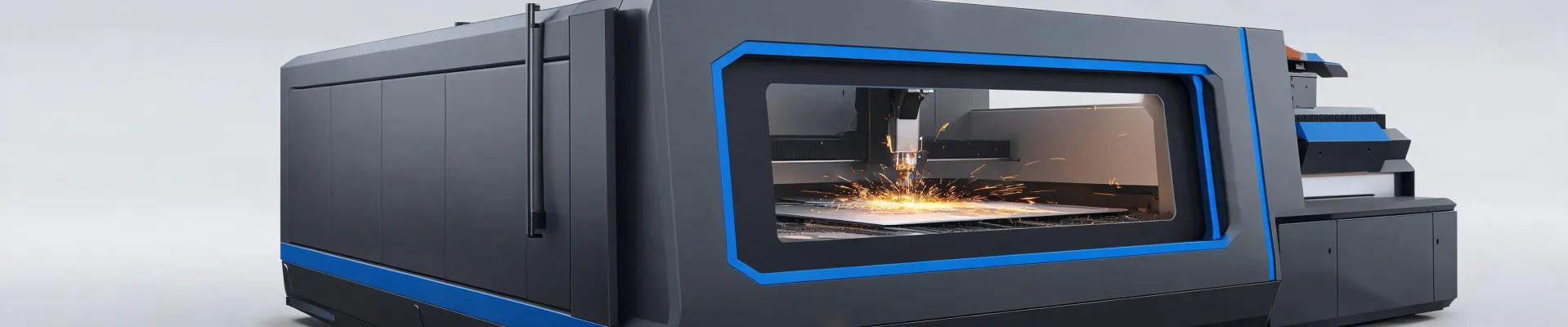
I almost saved $300 on a set of Bystronic laser bellows last spring. The listing looked legitimate: a warehouse in Ohio, decent reviews, photos that matched the part number we'd been ordering for three years. The price was 40% less than what we normally pay. I had the order form filled out and was about to hit submit when something made me check the return policy first.
The return policy killed it. Full 20% restocking fee. No coverage on laser optics or expansion joints. "Authorized repairs only," buried in the fine print.
I closed the tab. But I didn't let go of the feeling that we were overpaying for Bystronic laser consumables. It took one more bad experience—and an $18,000 mistake—to realize I was the one who had it backwards.
The Surface Problem: It's Easy to Think You're Being Overcharged
Here's a bit of context. I'm the office administrator for a 45-person metal fabrication company. I handle all maintenance and production supply ordering—roughly $120,000 a year across 20 vendors. I report to both operations and finance, which means I'm constantly caught between "keep it running" and "keep it cheap." When I took over purchasing in 2021, I pulled together our annual spend on Bystronic laser consumables—nozzles, focus lenses, protective windows, bellows, filters—and I remember getting a number that made me flinch.
It's tempting to think there's a cheaper source. People assume Bystronic parts carry a big brand markup. From the outside, that's exactly what it looks like. A set of replacement bellows meeting factory spec runs about $2,400 through our regular supplier. Third-party listings show the same part number for as low as $1,200. Half the price. Same photos. Same description. That gap stares you in the face month after month. Eventually you start wondering if you're being loyal instead of being smart.
And the bigger question never stays buried for long: why did we spend what we did on a Bystronic fiber laser when a China laser plate cutting machine costs so much less upfront? I've heard that question in budget meetings. I've asked it myself. The answer, I eventually learned, is connected to the parts problem.
The Deeper Problem: What a Part Actually Protects
Everyone told me to verify suppliers before approving parts. I didn't truly believe it until I skipped that step once and it cost us nearly $18,000. I should add: the part itself was only $120. The damage came from everything around it.
A laser cutting machine is a system, and every component is a gatekeeper. The bellows aren't just sheets of metal. They keep dust and debris off the linear rails that position the cutting head. Contaminate those rails and the head loses tolerance—the machine starts cutting wrong in ways that don't show up until customers start complaining. The protective window isn't just a slab of glass. It sits between the SFX fiber laser oscillator and the cutting area, with a coating engineered to handle specific power densities. When a cheap window fails, it doesn't fail like a burst hose. It fails slowly, invisibly, and it contaminates everything around it.
I only believed all this after living it. In early 2023, our machine started producing inconsistent cuts on 12mm mild steel. The SFX fiber laser oscillator was reading normal parameters. The operators pointed at the wear items first, which is standard practice. But our regular supplier was out of stock on the protective window, with a ten-day lead time. And a customer deadline was breathing down our necks.
I found a "compatible" window from a reseller two states away. They claimed factory specs. The QCW laser cut quality was already degrading, and I had about two hours to decide before the expedite window closed. Two hours to do what I'd normally spend two days researching. I hit submit and immediately thought: did I just make a mistake? But I rationalized the doubt away.
Day one with the new window seemed fine. Day two, the cuts got worse. By day three, we had dross on 12mm steel, and the operator spotted scoring on the window—the coating was failing under load.
We swapped it out. But the damage was spreading. Two hundred pieces had gone through the machine with compromised optics. Debris had migrated to the protective lens, shifting the beam profile. A full optics cleaning took two technicians an entire shift. The machine didn't just lose a day. It lost precision for days before we identified the source.
It's tempting to think you can compare spec sheets and call it due diligence. But spec sheets don't tell you about coating hardness at full power, tolerance stack-up, or thermal behavior under sustained load. The counterfeit part looked identical and measured identical—right up until we put actual cutting power through it.
The Cost of Getting It Wrong
Let me walk through what this actually cost us. Not the "I saved $300" math. The real numbers.
Two hundred pieces with compromised cut quality. Four customer rejections—two entire deliveries, two partial. That's $6,400 in rework material and labor. One rush order we couldn't meet because the machine was down: $4,100, gone to a competitor. Emergency freight to get the correct part from our normal supplier: $340. Operator overtime to re-cut rejected pieces: $1,900. That's $12,740 in direct costs.
Then there's the opportunity cost. Our laser department runs at roughly $740 per machine hour in contribution margin. Eight hours of troubleshooting and rework adds another $5,900. Total: just over $18,600.
For a $120 part. Bought to save a few hundred dollars and protect a deadline.
Here's the principle I wish I'd understood earlier. A $120 protective window is not a $120 decision. It's an $18,000 decision, because that's what it protects. The same goes for bellows, focus lenses, filters—anything that sits between the beam and the customer's part. The part price is table stakes. The real cost is what happens when that part fails. Industry studies consistently rank unplanned downtime among the largest controllable costs in manufacturing, with estimated annual losses in the tens of billions for U.S. factories (Source: The Manufacturing Institute/Deloitte, 2020). My spreadsheet agrees.
And this connects directly to the cheap-machine debate. When I hear about a China laser plate cutting machine priced 40% below our Bystronic, I don't doubt the number is real. What I've learned to doubt is the cost of ownership: whether replacement parts will still be available in five years, whether a service technician can reach us in a day or a week, whether the manufacturer will still be around. The upfront price is what you pay to find out those answers. Our mistake with a $120 window taught us what not knowing costs.
What We Changed and Why
After that incident, we started tracking failure rates by part type and supplier. Not just price—that was the old way. It's a simple spreadsheet now, with three years of data. The pattern is unmistakable: OEM parts have a 97% "no-touch" rate—box to machine, no issues. Third-party alternatives sit below 80%. At 80%, you're gambling every time you place an order.
We also made a clear category list. Cable glands, rubber hoses, basic hardware—third-party is fine. Simple items with no precision tolerance. Anything that affects the beam, optics, or alignment? OEM only. No exceptions, no negotiation. That list has cut our quality rejection rate by about 60% over the past two years.
We applied the same logic when we needed a replacement laser source. A used unit came up at $9,000 with 8,000 hours on it. The seller couldn't produce a service record. A new unit cost more than triple that—but it came with a two-year warranty and documented maintenance history. We didn't hesitate. A $9,000 part with a potential $40,000 problem attached to it isn't a deal. It's a liability.
Some shops run compatible parts and get by fine. At least, that's what they tell themselves until the first bad batch. In my experience, the savings aren't worth the uncertainty. Our customers don't know or care what we pay for components. They care about clean edges, held tolerances, and real delivery dates. That's how they judge us. And that judgment starts with the parts we put in the machine.
The morning I closed that tab on the counterfeit bellows, I felt frustrated. Now I'm grateful the return policy gave me an excuse to walk away. If you buy parts for a shop, don't let a tempting price gap convince you the OEM is overcharging. Question the claims. Verify the supplier. Run the numbers on what failure actually costs. Because "expensive" is sometimes exactly what you need.

Jane Smith
I’m Jane Smith, a senior content writer with over 15 years of experience in the packaging and printing industry. I specialize in writing about the latest trends, technologies, and best practices in packaging design, sustainability, and printing techniques. My goal is to help businesses understand complex printing processes and design solutions that enhance both product packaging and brand visibility.