
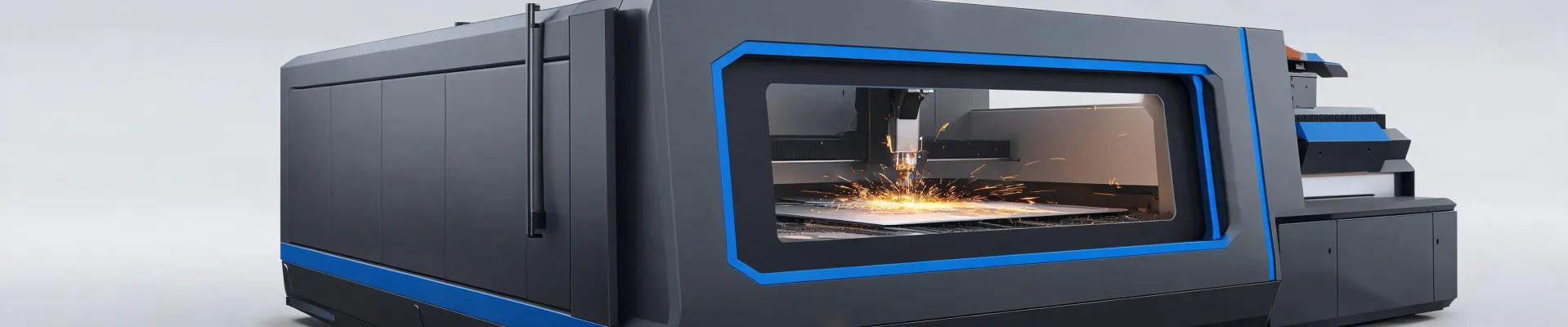
I remember the exact moment I realized my equipment choices were shaping how clients saw my company. I was standing in my shop holding a stainless bracket that had just come off a used manual press brake. The dimensions were technically in spec. But the bend line looked off. The edge had micro-tears. The client, a medical device manufacturer, noticed within seconds. We lost that contract before I even got back to my office.
I was sure that clients only cared about price and lead time. I was certain the machine that made the part didn't matter, as long as the part worked. Eight years and roughly $42,000 in rework and lost revenue later, I can tell you: your cutting and bending equipment is not overhead. It's your brand, rendered in steel.
The Assumption That Cost Me a Year of Growth
When I first opened my shop in 2017, I bought a used Hypertherm Powermax125 plasma cutter. Great handheld unit, honestly. Reliable, powerful, and fine for salvage work and structural steel. I paired it with a $12,000 manual brake I picked up at auction, and I told myself: a part is a part, the machine just makes it faster.
That logic held up for about a year. Then came the order that changed everything.
The Rejection That Made It Click
In March 2022, I landed a $4,800 order for 26 stainless enclosures. It was a trial run for a recurring account — the kind of client that could keep a small shop alive for years. I cut the blanks on the plasma table, bent them on the manual brake, and checked every piece with a caliper. Dimensions were within tolerance. I was proud of that order when it shipped.
They rejected 13 of the 26 pieces.
The rejection reasons didn't mention dimensions. They cited edge quality, inconsistent bend radii, and dross residue on the corners. Basically: it doesn't look like a professional product.
That order cost me $2,300 in material rework, a week of schedule chaos, and the client. They didn't tell me directly, but I found out later they moved the work to a shop running a Bystronic laser cutting system and a CNC press brake. The owner was kind about it when I called, but he said something that stuck with me: "The parts need to look like the drawing, not just measure like it."
What I Learned About Cheap Equipment
After that rejection, I spent three months obsessively researching what actually changes when you move from manual and semi-manual equipment to an engineered system like Bystronic laser cutting. The answer, I realized, is consistency.
A manual press brake depends on the operator's feel, fatigue, and judgment. It has good days and bad days. A plasma cutter with a hand torch puts the edge quality in the operator's hands. The first piece on Tuesday might look great. The piece at 4pm on Friday, when the guy is tired and the shop is cold, will not.
The same is true of marking and engraving equipment. I watched a colleague struggle with a budget fiber laser engrave machine that lost calibration on engraving aluminum after roughly 200 pieces. He kept adjusting it, kept re-running rejects, and never really factored in the cost of his own time doing that. Meanwhile, a shop three towns over with a proper industrial fiber laser never talked about calibration. They just loaded the file, ran the batch, moved on. Same clients. Same material. Different reputation.
When I switched to a used Bystronic press brake in January 2023, I paid $78,500 for a 2019 model with 3,700 documented hours. It felt like a reckless amount of money. But I tracked the numbers, and I'm glad I did:
- Parts that came off the manual brake with any deviation: 11% (47-piece sample)
- Parts that came off the Bystronic with any deviation: 1.2% (328-piece sample)
- Rework costs tied to the manual brake in Q4 2024: $3,400 material + $1,200 labor + $800 in overnight shipping
- Rework costs tied to the Bystronic in the same period: $0
That adds up fast. But it's not only the money that matters — it's the mental shift.
Quality Changes the Conversations You Can Have
Before the upgrade, I quoted jobs and quietly hoped nobody asked about tolerances. I'd say "we hold tight tolerances" and immediately feel embarrassed, because I knew a manual brake drifts on the tenth bend of a long run.
Now, with the Bystronic laser doing the cutting and the CNC press brake doing the bending, I can honestly promise a client: "Every piece will be identical, within ±0.1mm, across the whole production run."
That sentence alone has changed the caliber of clients who take me seriously. In 2024, I quoted a five-figure job for a robotics company that would have laughed at me in 2021. We got the order. Not because our shop grew bigger, but because our output finally matched the claim.
Of course, equipment isn't magic. I've seen shops with a Bystronic still produce junk, usually because they skip maintenance or hire operators who think the machine does everything. But the difference that I genuinely felt is this: with reliable gear, the only remaining variable is me. The machine stopped being an excuse.
What About the Other Machines People Search For?
The same principle applies across the board. That Powermax125 plasma cutter I mentioned earlier? I still own mine, and it's a fine tool for demolition or heavy fabrication. But it was never a precision production tool, and I wasted two years pretending otherwise.
Similarly, a lot of people ask about fiber laser engraving or wood laser marking machines for small shops. My advice: the brand matters less than the repeatability of the frame and the motion system. A $3,000 engraver can do good work for a while, but if it can't hold alignment on the 300th part, the "savings" disappear into rework and returned shipments. A proper industrial unit costs four times as much, and it will be the last one you buy for a decade. It's the same math as the press brake, just at a smaller scale.
"I Can't Afford a Bystronic" — And Why That's Exactly the Problem
I hear this from younger shop owners all the time. I thought it too. I remember looking at used Bystronic press brakes for sale and convincing myself that kind of machine was for "big facilities" with six-figure equipment budgets.
Here's what I missed: I was already paying for the premium machine every single month. Not in loan payments — in rework, rejected orders, discounted pricing, rushed shipping, and clients who quietly stopped calling. In 2022, I conservatively estimate we lost $60,000 in potential revenue because of quality issues. The used Bystronic cost $78,500. It paid for itself in about a year, and it's now an asset instead of a recurring leak.
Look, I'm not saying you need to buy new. Certified used equipment, if you can get the service history documented, can be the smartest purchase a small shop makes. I'm also not saying cheap tools don't have a place. But the tool that creates the parts going out your door to paying clients is different. That tool represents you.
Every edge, every bend, every engraved logo is evidence about who you are. Clients can't always articulate why they trust one shop over another, but they always feel it.
Bottom Line
I made the expensive mistakes so you don't have to. Whether you're looking at Bystronic laser cutting systems, a used press brake for sale, or even a wood laser marking machine to open a side stream, the logic is the same: the equipment that produces your client-facing work is not the place to save money.
It's where you make money — or where you lose it, one subtle rejection at a time.

Jane Smith
I’m Jane Smith, a senior content writer with over 15 years of experience in the packaging and printing industry. I specialize in writing about the latest trends, technologies, and best practices in packaging design, sustainability, and printing techniques. My goal is to help businesses understand complex printing processes and design solutions that enhance both product packaging and brand visibility.