
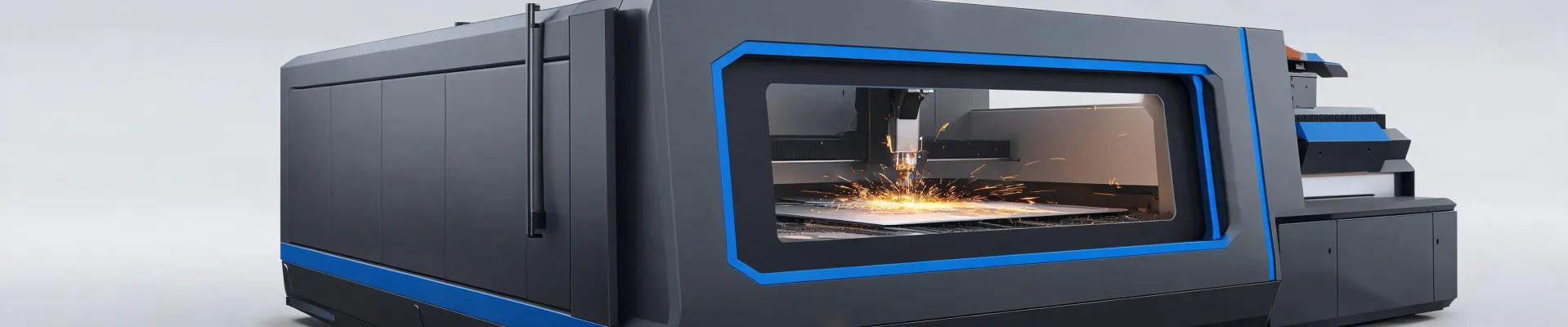
If you've ever sat through a capital equipment quote for a Bystronic 10kW fiber laser and felt your stomach drop, I get it. The number at the bottom looks like a small building. And when you're a cost-conscious buyer, your first instinct is to back away slowly.
I used to think that price was the whole game. I'd compare quote line items like I was shopping for office chairs. Then in Q2 2023, I watched a 'cheaper' machine from another fiber laser manufacturer eat $47,000 in hidden costs over 18 months - tooling, downtime, service travel, software modules we assumed were standard.
This article is not a Bystronic sales pitch. It's a procurement walkthrough of why the real cost of a Bystronic 10kW fiber laser goes far beyond the sticker price - and why the search for 'taglio laser fibra Bystronic' might be leading you to the right questions, even if you're asking them in the wrong order.
The Surface Problem: Sticker Shock
Ask any fiber laser manufacturer for a price on a 10kW system, and you'll see a huge range. As of January 2025, based on quotes I've collected and seen in industry discussions, Bystronic 10kW systems land somewhere in the $850,000-$1.2M range depending on automation, options, and region. That's a big number. (Note: that's not a quote - your local Bystronic rep sets actual pricing.)
But here's the surface problem most buyers bring to me: 'How do I get the best Bystronic 10kW fiber laser price?'
It's the wrong question. And I know because I've asked it myself - more than once.
The Deeper Problem: You're Buying a System, Not a Resonator
The laser source is maybe 35-40% of the system cost. The rest is the frame, the motion system, the chiller, the control software, the safety enclosure, the automation interface, and - the part that surprises almost every first-time buyer - the workholding. If you're cutting round or irregular parts, a fiber laser chuck can add five figures to the quote. If your parts are large and heavy, a different chuck design can cost more than the laser source itself.
I remember a project where we spent more on the chuck and fixture package than on the cutting head. Nobody warned us. The first quote from the fiber laser manufacturer just said 'workholding' with a lump sum. When I asked for an itemized breakdown, the lightbulb went on.
This is where total cost of ownership stops being a buzzword. A $900,000 machine that cuts 20% faster is worth less than a $1.05M machine that runs 85% uptime in your specific production mix.
But you don't know your uptime until you know what's actually included in the quote.
What Most 10kW Fiber Laser Quotes Get Vague About
From my experience reviewing quotes from multiple fiber laser manufacturers - Bystronic and a few others - the ambiguity always clusters in the same places:
- Workholding and chucks. Is the chuck included? Which one? Does it work with your existing part configurations?
- Software modules. Basic nesting and file import are standard. Automatic nesting, bend simulation, or IoT connectivity? Often paid add-ons.
- Installation and rigging. A laser weighs 15-20 tons with the frame. The quote might only include 'standard installation,' not moving it through a narrow plant entrance.
- Training and start-up. Is operator training for one person or four? Does the quote include process development for your actual parts?
- Spare parts and consumables. Nozzles, lenses, protective windows, filters. A high-power fiber laser doesn't run on magic.
- Service response time. It's in the small print. I've seen quotes with 'standard response: 48 hours.' For an aerospace manufacturer running production shifts, that's an eternity.
If you're comparing an aerospace industry laser cutting machine, these line items matter even more. Aerospace parts have strict traceability requirements. You need process documentation, material certifications, and repeatable quality. A machine that's cheap to buy but produces scrap on critical titanium parts is not a bargain - it's a liability.
The Cost of Ignoring This: A Personal Example
In 2022, I was comparing two 10kW systems. Vendor A, a larger fiber laser manufacturer, quoted $985,000 with a detailed specification. Vendor B quoted $842,000 - $143,000 less. I was ready to sign with B. My CFO was ready too.
The night before the board presentation, I built a simple TCO model. Not a fancy one. Just a spreadsheet with expected maintenance, software subscriptions, estimated downtime, and the cost of the after-sale support we'd had with each vendor in the past.
By the time I added it all up, Vendor B's savings disappeared. Their service travels at $185/hour. They charge for software patches that Vendor A included. The chuck they quoted didn't fit our existing fixture plates, so we'd need a $22,000 adapter. Their process training was only for a single operator, not our two shifts.
The gap narrowed from $143,000 to about $9,000 - and that's before considering faster part cycle times and the cost of a failed qualification. The 'cheap' option wasn't cheap. It was just cheaper at the wrong moment.
I'm not telling you to buy Bystronic specifically. I'm a cost controller, not a brand ambassador. But I will say this: when I got the Bystronic 10kW fiber laser price from our local rep, it looked high compared to Vendor B. After the TCO model, it looked different.
The Hidden Cost of Small Orders (And Why I Care)
Small customer gripe: the same quote that made my CFO nervous looked even worse from the inside. As a smaller aerospace supplier, I used to worry that vendors would rather sell to a Tier 1 than deal with our order sizes.
That fear isn't baseless. I've had sales reps go quiet when they learned our annual volume. I've been told 'we usually quote that machine with the full automation package' when I only wanted a flexible fiber solution plus a manual chuck.
Here's the thing I learned: a good supplier doesn't make you feel small. Bystronic's local sales team didn't. They asked about our part mix, our building constraints, our existing equipment. They recommended a fiber laser chuck package that was enough for now, not the one that maximized the quote.
Small doesn't mean unimportant. In our case, the first machine led to a second one three years later. I still remember the vendors who treated my $200 orders seriously - and the ones who didn't are out of the loop now.
What I Wish I'd Known Before Buying a Fiber Laser
If I could go back and tell my rookie self a few things, it would be:
- The listed laser wattage is nearly the least interesting number on the spec sheet. The beam quality, cutting speed at your material thickness, and acceleration dynamics are what determine throughput.
- The fiber laser chuck is not an accessory. It's part of the production equation. Different part sizes, bar handling, and rotary cutting need different chuck designs.
- Ask for the installed cost in writing. Rigging, electrical work, ventilation, foundation, tooling - those are real line items.
- Always ask the fiber laser manufacturer who their last three aerospace customers were. Then call one of them.
- Get the quote's validity period in writing. Prices in this sector move with global steel, laser source supply, and shipping lanes.
What to Do Next (Short Version)
Here's the mistake I keep seeing: buyers search for 'Bystronic 10kW fiber laser price', find one number, and start negotiating against it. Or they search for 'taglio laser fibra Bystronic' to read European documentation and assume the specs transfer directly to their local setup.
Stop. Instead, do this:
- Get an itemized, current quote for the complete system - with chucks, automation, software, training, installation, and service response time written in.
- Build a simple TCO model for a 5-year horizon. Use 2% annual maintenance cost, 3% consumables, and one service call per quarter as starting assumptions. Then adjust for your actual aerospace requirements.
- Ask for reference calls with current owners of the same machine, not just the same brand.
- If you're an aerospace industry buyer, ask for delivery performance data and process validation documentation before you sign.
According to Bystronic's own product documentation (bystronic.com, accessed January 2025), the 10kW platform is aimed at high-volume sheet and plate cutting. The actual cutting speed depends on material, thickness, assist gas, and the part handling setup around the machine. In other words, the spec sheet is the beginning, not the end.
That's it. The Bystronic 10kW fiber laser price is one line in a longer story. The rest of the story - the chuck that fits your parts, the service engineer who answers the phone, the software that doesn't upsell you every year - is where the real cost hides.
I'm not a laser physicist and I don't pretend to be one. What I know is procurement. And procurement says the most expensive machine is the one that stops your production line for the same reason twice.
Prices as of January 2025; verify current pricing at bystronic.com.

Jane Smith
I’m Jane Smith, a senior content writer with over 15 years of experience in the packaging and printing industry. I specialize in writing about the latest trends, technologies, and best practices in packaging design, sustainability, and printing techniques. My goal is to help businesses understand complex printing processes and design solutions that enhance both product packaging and brand visibility.