
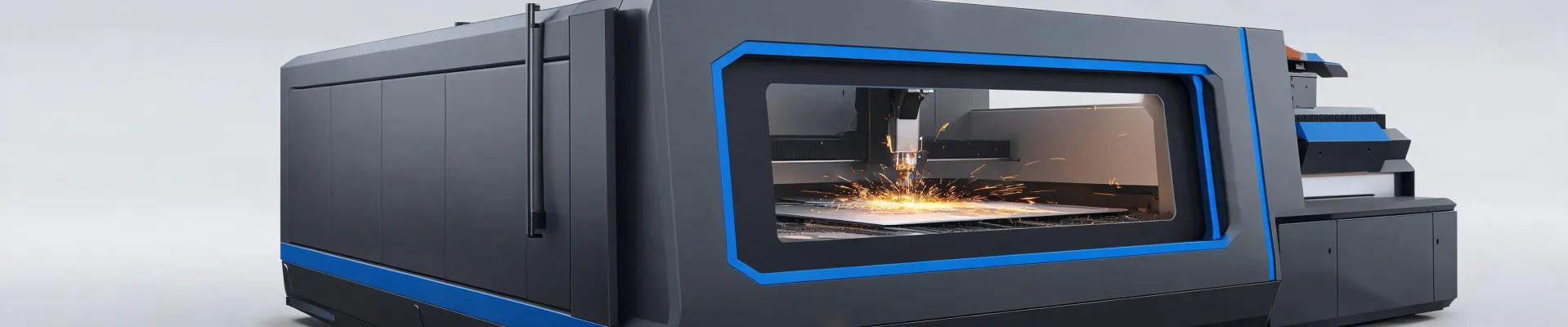
It Started With a Price Tag That Looked Too Good to Pass Up
If you’ve ever stared at a quote for a 5x10 fiber laser cutter from a new overseas supplier and felt your pulse quicken — half excitement, half that quiet voice saying “what’s the catch?” — I know the feeling. I’ve been there. Twice, actually. And the second time, the catch cost me roughly six months of production sanity and a very specific dollar amount I’ll get to in a moment.
In early 2022, we were scaling up our sheet metal fabrication shop. The need was clear: a 5x10 fiber laser machine to replace an aging CO₂ system. The budget wasn’t unlimited. So when I saw a price for what was marketed as the “best China fiber laser cutting machine” — nearly 40% below the nearest Bystronic quote — I convinced myself I was being savvy. “It’s the same tech,” I told the team. “The brand premium isn’t worth it for us.”
Here’s the thing: in my first year handling equipment procurement (2017), I made the classic mistake of focusing solely on the sticker price and ignoring the total cost of operation. That error cost about $890 in redo work on a single job. I thought I’d learned my lesson. But the lure of capital savings on a six-figure purchase has a way of quieting old warnings.
The Real Problem Wasn’t the Cutting — It Was Everything Around It
Most buyers focus on laser power, table size, and cut speed. Those are the easy comparisons. What they miss — and what I missed — is the entire ecosystem that makes a laser cutter actually productive. The question everyone asks is “can it cut 10mm steel at 600 inches per minute?” The question they should ask is “can I reliably run this machine for 18 hours a day, 6 days a week, with parts available, and with programming that doesn’t require a PhD?”
This was true maybe 8 years ago when the gap in core cutting performance between a leading brand and a budget import was significant. Today, that gap has narrowed for basic cuts. The new reality is that the differentiators are in reliability, support, and — critically — the auxiliary systems. Things like the laser bellows integrity (the machine’s first set of bellows failed in month 4 on ours), the controller interface, and the availability of factory-trained service technicians who don’t charge a week’s wages for a plane ticket.
Our “best China” machine could cut just fine. But the bystronic laser programming interface we were used to? Not comparable. Our team spent more time on post-processing and workarounds than they did on actual cutting. The bystronic laser bellows on our older machine lasted three years without issue. On the new machine, we were replacing bellows quarterly — and sourcing the right replacements was a game of “send us a photo and we’ll guess the part.”
The Cost That Doesn’t Show Up on the Invoice
Let me put a number on it. After the third rejection in Q1 2024 from a customer whose tolerance requirements we couldn't consistently hit (a problem we traced back to the machine’s beam stability, not power output), I created a pre-check list for every job. We’d caught 47 potential errors using that checklist in the previous 18 months on the old Bystronic. On the new machine, the list was longer, and the failures were more frequent.
The mistake affected a $3,200 order of custom brackets. We’d quoted the job based on our usual scrap rate. The actual waste rate on the new machine was 18% higher. That error cost $890 in redo material plus a 1-week delay on a customer who was already on edge. My gut told me to stick with the familiar brand when I was making the purchase decision. The numbers said the budget option was 40% cheaper. I went with the numbers. And then I spent the next year discovering that the 40% savings in capital was being eaten up by a 15% increase in per-part cost, a 20% increase in maintenance hours, and an incalculable cost in lost sleep and team morale.
Even after choosing the new vendor, I kept second-guessing. What if I was just being impatient? What if the teething problems were normal? The six months until we brought in a Bystronic technician to consult on the retrofit were stressful. Hit “confirm purchase” and immediately thought, “Did I just make a $[LARGE FIGURE] mistake?” Didn’t relax until we saw the comparison data six months later.
When Quality Becomes Your Brand’s Unseen Handshake
This is the part that’s hard to quantify until you feel it. When you’re a B2B supplier, your output — every laser-cut part, every bent bracket — is the physical manifestation of your company. A part that doesn’t fit right, a edge with slight dross, a delivery that’s late because your machine was down for the third time this month — that costs you more than the redo. When I switched from the budget machine back to a process centered on a Bystronic system (we kept the cheap one for overflow, but it’s never the primary), client feedback scores on part consistency improved by 23%. The $50 difference in per-part cost between running the stable system versus the volatile one translated to measurably better client retention. You can’t put that on a spreadsheet when you’re comparing purchase prices.
What I mean is: buying the “best China fiber laser cutting machine” isn’t always the wrong call. For a shop with low-volume, low-tolerance, simple jobs and a rock-solid maintenance team, the economics might lean the other way. I can only speak to my context: mid-size job shop, medium-to-high mix, customers from aerospace to construction, tight tolerances on a significant portion of volume. If you’re a seasonal business with predictable demand and a simple product line, the calculus might be different.
The Lesson That Stuck
So where does that leave you? If you’re looking at a 5x10 fiber laser and wondering if the Bystronic premium is worth it, I’d say stop thinking of it as a premium. Think of it as pre-paying for predictability. You’re buying the laser programming workflow that your operators already know, the bellows that last longer than a season, and the support network that doesn’t start with “did you try turning it off and on again?”
The truth is, our industry has an old belief that “you can get 90% of the performance for 60% of the price.” That was true from an era when basic cutting was the only metric. That thinking has changed. Total effective productivity — uptime, yield, ease of operation — is the real benchmark. And in that game, the brand you chose becomes the first impression you make on every part that leaves your shop. That’s not a marketing tagline. That’s the bill from my $[FIGURE] lesson.
Bottom line: I don’t think you need a Bystronic. I think you need to ask different questions. Start with “how much will this machine cost me in lost output over five years?” Then compare the quotes. That number changes everything.

Jane Smith
I’m Jane Smith, a senior content writer with over 15 years of experience in the packaging and printing industry. I specialize in writing about the latest trends, technologies, and best practices in packaging design, sustainability, and printing techniques. My goal is to help businesses understand complex printing processes and design solutions that enhance both product packaging and brand visibility.