
-
What Makes a Bystronic Laser Cutting System Different?
-
What's the Difference Between a Fiber Laser and a CO2 Laser?
-
What Does a CNC Plasma Cutter Do, and When Is Fiber Better?
-
How Much Does a Bystronic Laser Cutting System Cost?
-
Is Buying a Used Bystronic Machine Worth It?
-
Should We Buy a System or Outsource to a Local Laser Shop?
-
Is a Fiber Laser Coder the Same as a Laser Cutting Machine?
-
What About Service, Training, and Parts?
If your boss just dropped 'research laser cutting systems' on your desk, you're probably buried in spec sheets, YouTube videos, and vendor brochures that all sound the same. I've been there. I handle purchasing for a mid-sized metal fabrication company — about 60 to 80 purchase orders a year, covering everything from MRO parts to capital equipment. I'm not a laser physicist. But after running three equipment searches in the past five years, I've learned which questions actually matter. Here are the ones I'd want answered.
What Makes a Bystronic Laser Cutting System Different?
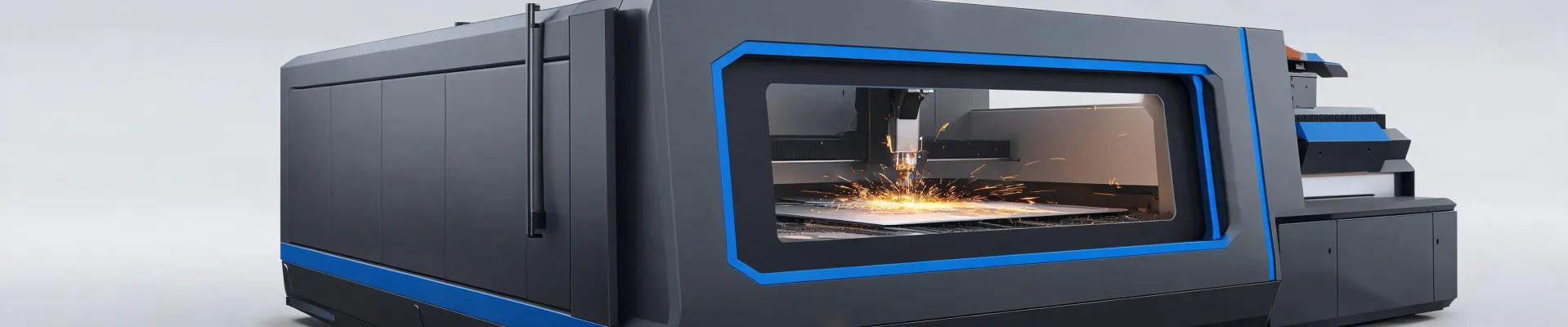
Bystronic makes more than just a laser cutting machine. The 'system' includes the machine, the BySoft control software, and optional automation — and it's the integration that caught my attention. On paper, any high-powered laser can cut steel. But when the machine, software, and material handling talk to each other, you get fewer hiccups. (Which, honestly, is rare in the metalworking world.) In my experience, that integration reduces training time. Our operators didn't need a Ph.D. in CNC to run the thing — the screen guides you. That's important when your shop, like mine, has a revolving door of operators.
Why does this matter? Because if you're comparing a Bystronic system against a kit from a cutter vendor plus separate automation, you also inherit the 'who's responsible when it doesn't work?' game. I've seen that movie. It ends with finger-pointing and an expensive service call.
What's the Difference Between a Fiber Laser and a CO2 Laser?
This was my first question. CO2 lasers are gas-based and have been around for decades. They're still useful for cutting wood, plastics, and other non-metals, and many job shops — including some in Westchester County — offer CO2 laser cutting services. But for sheets of steel and stainless steel, fiber lasers are the modern choice. They cut faster, use less energy, and require less maintenance. According to the Laser Institute of America, fiber lasers are generally more energy-efficient than CO2 lasers of comparable power. The same fiber technology used in compact fiber laser coders on packaging lines is the foundation for Bystronic's cutting machines — just scaled up dramatically in power. If you're searching 'CO2 laser Westchester' because you have a small job, a CO2 shop will probably do fine. But for a capital purchase in 2025, fiber is where I'd put my money.
What Does a CNC Plasma Cutter Do, and When Is Fiber Better?
A CNC plasma cutter uses an electrically conductive gas to blast through metal. It's a workhorse in heavy fabrication, particularly when you're cutting plate over an inch thick. For that kind of material, plasma might be the only cost-effective way to go. But for the 10-gauge to 1/2-inch range that most job shops encounter, a fiber laser is faster, leaves a cleaner edge, and creates less heat distortion. That means fewer secondary operations like grinding or deburring. Not ideal if you're a heavy-plate shop — but if you're mostly sheet metal, laser wins on throughput and edge quality. And in my experience, edge quality directly affects how fast a part moves through welding and finishing.
How Much Does a Bystronic Laser Cutting System Cost?
I wish I could give you a flat number — but the honest answer is, it depends. In our 2024 budget cycle, I collected quotes for a 6kW Bystronic fiber system with a 10-foot bed. The numbers came in from $390,000 to $620,000, depending on automation, options, and how much the salesperson wanted to play ball. That did not include installation, ventilation, training, or the first set of nozzles and lenses. And here's the kicker: the lowest quote did not include the automation interface — a 'technicality' that would have added $50,000 later.
The more important number is total cost of ownership. When one of our older machines broke down mid-job, I had maybe 24 hours to decide whether to wait for repair or send the work out. That taught me that the price of the machine is just the ticket to the casino. Downtime, rejects, and maintenance are where the real money goes. If a machine isn't hitting utilization, the initial savings mean nothing. So calculate TCO, not just the quote.
Is Buying a Used Bystronic Machine Worth It?
If you're looking at 'Bystronic fiber laser cutting machine image' listings online and thinking of going used, slow down. Used lasers can be a bargain — or a black hole. In my experience, the condition of the laser source, cutting head, and alignment matter more than the meter hours. Ask for service logs, linear guide wear, and resonator runtime. If a seller won't share maintenance history, that's a red flag. I also recommend checking marketplace listings for a baseline: according to Machinio (January 2025), used Bystronic systems ranged from roughly $80,000 for older CO2 models to over $500,000 for recent fiber machines with automation. Calculate the worst case: if the laser module fails, you might face a $100,000+ repair. If a bargain machine isn't backed by a warranty or a local service network, the savings can evaporate quickly.
Should We Buy a System or Outsource to a Local Laser Shop?
If your company only needs occasional parts, outsourcing is the smart move. There are decent service providers out there — including the 'CO2 laser Westchester' shops that might appear in your search results — and you avoid capital, maintenance, and hiring costs. But if you're outsourcing hundreds of hours a month, the per-part economics change. Let's do a rough napkin calculation: a job shop might charge $90–$150 per hour. Own that 6kW system, and after the first 2,000 to 3,000 hours, your variable cost drops to around $20–$40 per hour, not counting labor.
Here's the risk weigh: the upside of owning is a significantly lower cost per part. The risk is utilization. If the machine sits idle, it's burning depreciation and floor space every month. So be honest about your volume. If you're uncertain, a trial period with a service provider can give you data before making the leap.
Is a Fiber Laser Coder the Same as a Laser Cutting Machine?
This one popped up a lot during my research, and it confused me at first. A fiber laser coder — the kind used for dating bags and bottles on production lines — is a completely different piece of equipment. It marks tiny, high-contrast codes on small areas. It doesn't cut. Bystronic doesn't make coders; the company focuses on cutting, bending, and automation. But both technologies use fiber laser sources, which is why the term 'fiber laser' can be misleading. Understanding that distinction helped me filter my search and explain to our operations team why we weren't looking at coders.
What About Service, Training, and Parts?
One thing that separates Bystronic from some other vendors in my book is the service ecosystem. When you buy a laser cutting system, you're also buying the supplier's ability to answer the phone at 3 p.m. on a Friday. I've had vendors that disappeared after the sale — and trust me, that's more expensive than any premium. With Bystronic, there's a network of certified service technicians, and parts are designed to fit without custom fabrication. Training is also part of the package, which reduces startup time. A laser system is a decade-long investment. Make sure the support network is there before you sign.

Jane Smith
I’m Jane Smith, a senior content writer with over 15 years of experience in the packaging and printing industry. I specialize in writing about the latest trends, technologies, and best practices in packaging design, sustainability, and printing techniques. My goal is to help businesses understand complex printing processes and design solutions that enhance both product packaging and brand visibility.