
Thursday, 4:47 PM: The Call Nobody Wants
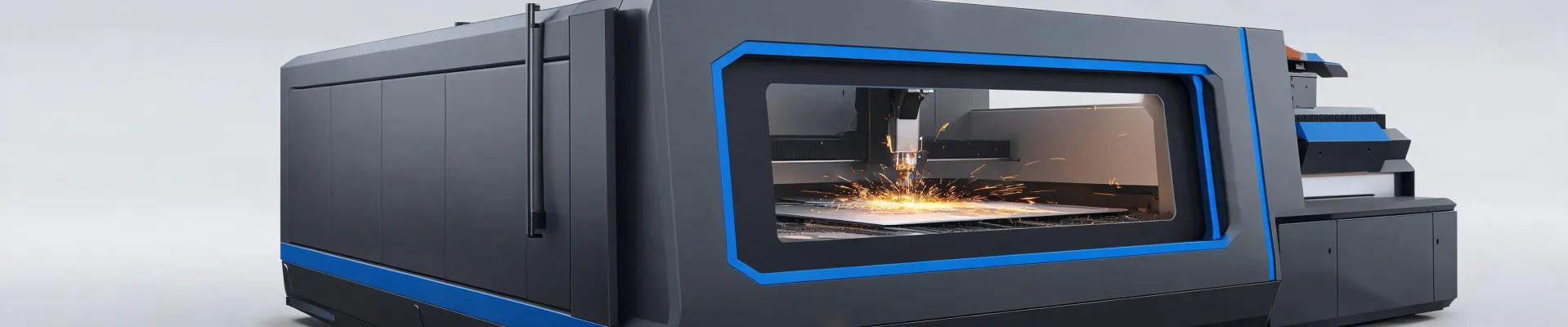
I got the call on a Thursday afternoon, less than 24 hours before a customer's critical production shift. Their Bystronic fiber laser had stopped mid-run, and they needed a replacement cutting head nozzle plus a ceramic ring by Friday morning. Normal shipping would take three days. Their alternative? Stop a $50,000 order line and wait.
That's not an unusual situation in my line of work. I coordinate emergency support for industrial laser cutting operations, and I've handled this exact type of request dozens of times. In the last quarter alone, we processed 47 rush orders with a 95% on-time delivery rate. That sounds good, but the real question I've learned to ask is: why did 47 orders need to be rushed at all?
If you've been searching for "taglio laser fibra Bystronic" (that's Bystronic fiber laser cutting in Italian) or trying to source Bystronic laser consumables, you're probably focused on the machine itself. And that's where the real problem starts.
The Problem You Actually See: Missing Parts and Panic Buying
Most customers I talk to describe the problem the same way. The machine works fine — until it doesn't. Then they find out the nozzle they need isn't in stock, the local supplier doesn't carry that exact specification, and the only option is paying $450 in expedited shipping for a part that should cost $85.
So they assume the problem is their vendor's poor inventory. Or the shipping company. Or the fact that they bought the machine from a manufacturer that doesn't have local support.
In my experience, though, that's the surface issue. The deeper problem is much more expensive — and it's been building for months before that phone call.
What's Really Going On: Three Hidden Causes
1. The Assumption That "Compatible Parts" Are Good Enough
A few months ago, I worked with a client who'd been buying low-cost replacement parts through an online marketplace. The parts looked identical, but they weren't. The ceramic ring has tighter tolerance specs than most aftermarket suppliers realize, and the nozzle dimensions have to match your exact cutting head geometry. On paper, it's the same part. In practice, it's not.
What happened? The machine cut fine for about 30 hours. Then the lens fogged up, the beam quality shifted, and the entire cutting head needed service. That "savings" of $16 per part turned into a $3,800 repair bill and 34 hours of downtime. I've seen this pattern at least 15 times in the last two years (unfortunately).
I've learned never to assume "same specification" means the same manufacturing tolerances. Verify. Or you'll be conducting your own premature wear study.
2. The Communication Mismatch Between "Urgent" and "Complete"
Here's a classic scenario. A customer calls and says, "We need a new cutting head for our 4kW laser. It's urgent." I ask for the model number. They don't have it. I ask for the serial number of the machine. They say "it's on the back, but I can't read it right now." We've wasted 15 minutes. The wrong part gets shipped, arrives in 24 hours, and doesn't fit.
We were using the same words but meaning different things. When they said "cutting head," they meant the whole assembly. I needed the exact variant that matched their laser's fiber connector and focus distance. That mismatch cost us another 48 hours (without even paying for the part yet).
This isn't a vendor problem. It's a preparation problem. And it's solvable with a standard parts checklist for your machine — which most factories never bother to create until the first emergency.
3. The Industry Has Evolved, But Your Maintenance Plan Hasn't
The fundamentals of laser cutting haven't changed — you need a resonator, a beam delivery system, and a motion system. But the execution has transformed dramatically. What was best practice in 2018 may be actively harmful in 2025.
Take fiber lasers. They're far more sensitive to contamination than the old CO2 systems. A single faint dust particle on an optical window can cause significant power loss. That's why single-frequency CW fiber lasers and modern pulsed systems require cleaner optics and more precise handling than anything we dealt with a decade ago.
Similarly, a "factory fiber laser" today is usually integrated into a connected automation cell. It generates data on power output, gas pressure, and consumable wear. That data can tell you exactly when a part is going to fail. But in my experience, a surprising number of shops still ignore that data and follow the old "run it until it breaks" philosophy.
Even if you're running an older CO2 laser in Pittsburgh, the supporting ecosystem has changed. Suppliers are shifting stock toward fiber components, and legacy parts are getting harder to source. So your emergency lead time grows longer every year, whether you like it or not.
The Real Cost of "Fixing It Later"
Let's put numbers on this. I usually hear machine operators say "we'll deal with it when it happens." Here's what actually happens:
- Unplanned downtime. In our internal data from 200+ rush jobs, the average downtime was 6.5 hours. At a conservative estimate of $120/hour based on our billing records, that's $780 per incident — before you spend a cent on the repair.
- Expedite and shipping fees. Average extra cost: $300–$900 per rush order. For next-day air with a before-9:00 AM guarantee, add 50–100% to the part cost. We've been tracking these numbers since 2024 and the pattern is consistent.
- Missed deadlines. In March 2024, one of our customers faced a $50,000 penalty clause if they didn't deliver a batch of components by Friday. The machine failure happened on Wednesday. We managed to source the part in time, but their margin on that order was consumed by expedite fees and overtime labor.
- Team exhaustion. Emergencies are not free. Your maintenance team ends up working nights, your operators lose confidence, and your purchasing department develops a reflex to overstock parts you don't need.
The most frustrating part of this whole pattern is that in 90% of these cases, the breakdown could have been avoided with a proactive parts plan. It's not your machine's fault. It's the outdated process around it.
What's Changing: The Move Toward Predictability
I know the temptation to read this and think, "Great, another article telling me to be more careful." But this time, there's a structural shift that makes the old approach obsolete.
Modern Bystronic systems, especially those tied into smart factory solutions, can monitor their own condition. They track the hours on your cutting head, the thickness of your lens, the amount of gas being used, even the cleanliness of the protective window. That data can be used to predict when a component will fail — and schedule a replacement before it stops your line.
At the same time, the role of the equipment manufacturer has evolved. Today, Bystronic's portfolio includes consumable management programs, remote diagnostics, and pre-verified service kits that include every part you'll need for routine maintenance — designed based on real machine data, not guesswork. (Verify current offerings with your local Bystronic representative.)
That's a completely different approach from the old "buy replacement parts when they break" model. And it's supported by the math: a $500 preventive kit for a cutting head costs a fraction of the $3,800 repair bill I saw from that aftermarket failure. Prices as of 2025; verify current rates.
The fundamentals of good maintenance haven't changed: you still need the right part, the right information, and the right time to replace. But the execution — using machine data, standardizing your spare parts list, and working with a partner who stocks the right consumables — has transformed. The sooner your team treats it that way, the fewer 4:47 PM calls you'll make to people like me.
I'm not saying that emergency orders will ever disappear completely. Manufacturing is messy, and sometimes things break. But if you're regularly paying rush fees for Bystronic laser consumables, stop asking why the part didn't arrive faster. Start asking why you needed it in the first place.

Jane Smith
I’m Jane Smith, a senior content writer with over 15 years of experience in the packaging and printing industry. I specialize in writing about the latest trends, technologies, and best practices in packaging design, sustainability, and printing techniques. My goal is to help businesses understand complex printing processes and design solutions that enhance both product packaging and brand visibility.