
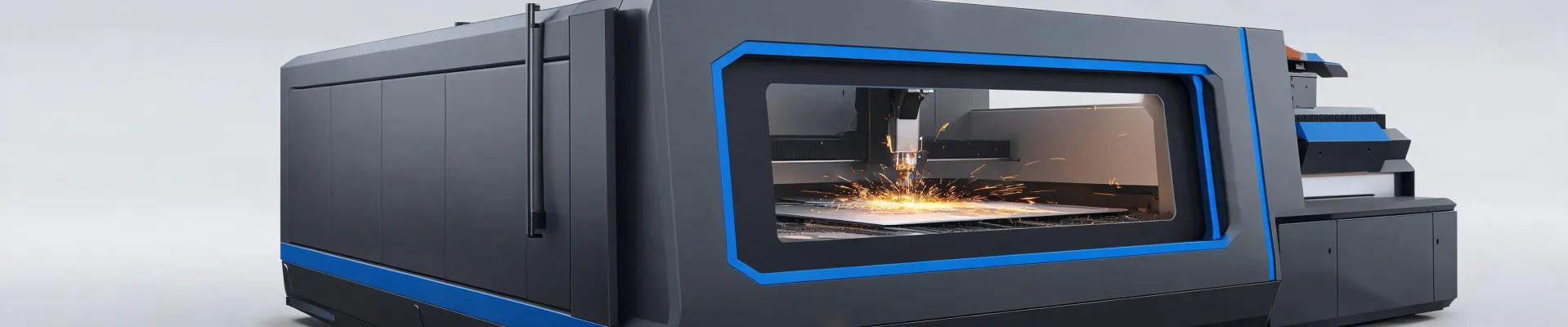
The one thing that separates a good Bystronic machine from a bad one isn't the brand
Look, I’ll be direct: buying a used Bystronic laser sight-unseen is a gamble you don’t want to take. I’ve reviewed over 200 industrial equipment deliveries in the last four years as a quality compliance manager, and I’ve rejected roughly 15% of first deliveries in 2024 alone. The reason? Specs that looked fine on paper but weren’t when we measured them.
Honestly, it took me three years and about 50 bad batches to realize that the real differentiator isn’t the brand name or even the laser power—it’s consistency in alignment and beam delivery. You can have a brand-new fiber laser cutter, but if the focal point shifts by even 0.1 mm due to a sloppy frame or worn rails, your cut quality is going to be garbage.
So here’s the deal if you’re looking for a Bystronic laser for sale, or even quoting a new fiber laser cutting machine: check the alignment spec first. Not the power rating, not the bed size—the tolerance on the beam delivery path. That’s where the real cost hides.
How I learned this the hard way
About two years ago, we sourced what looked like a great deal on a used Bystronic fiber laser cutting machine. The images were pristine—clean cabinet, shiny cut edges. The spec sheet claimed 3 kW output, which was fine for our sheet metal range. We bought it, paid a premium for installation, and... the first cut was off by almost 0.5 mm across a 2-meter sheet. The laser was firing, but the beam wasn’t centered on the nozzle axis by nearly 0.2 mm. (This was back in 2022, and I still have the test sample pinned on my wall as a reminder.)
The vendor said it was “within industry tolerance.” I rejected the batch, demanded a full inspection, and it turned out the frame had taken a hard hit during shipping. The alignment was bent. Fixing it cost us $7,000 in service fees and three weeks of downtime. The seller didn’t cover it because the contract didn’t specify alignment tolerances.
That’s when I implemented our current verification protocol: every incoming machine must pass a beam alignment test before we accept it. Now that spec is written into every purchase order. It’s basically a non-negotiable.
So what makes a Bystronic not a one-size-fits-all?
Here’s where the honest limitation comes in. Bystronics are fantastic for standard sheet metal work—consistent thickness, repeated cuts, automated part handling. I recommend them for that 80% of jobs. But if you’re doing thin-gauge precision work under 0.5 mm, or if your parts have complex internal contours that require constant focal adjustment, you might be better off with a machine that offers adaptive beam control. I’ve seen people buy a top-of-the-line Bystronic for delicate electronics enclosures, and they end up fighting the calibration settings for months.
“The best machine for you might not be the same as the best machine for me.”
That’s the truth. I’ve started turning down recommendations when someone says they need a laser for “everything.” There’s no such thing. A machine that cuts 16-gauge steel beautifully might struggle with 0.2 mm copper. The Bystronic fiber laser cutter is a workhorse, but it’s not a Swiss army knife.
How to avoid the same mistake
Fast forward to today. I’ve now processed over $1.8 million in used equipment acquisitions, and I’ve honed a checklist that saves me from the $7,000 mistake:
- Ask for the alignment test report before purchase. Not a photo of the machine—a recent (within 30 days) test cut with a certified tolerance report. If the seller can’t provide it, walk away.
- Specify inspection rights in the purchase order. You want the right to reject a machine if the beam misalignment exceeds your tolerance (e.g., ±0.05 mm on the nozzle axis). Don’t trust “industry standard” without numbers.
- Budget for re-calibration. Even if the machine passes alignment on paper, plan for $1,500–3,000 in realignment and gasket replacement. It’s cheaper than a catastrophic failure during production. (Oh, and always check the fiber lens condition before you power it up—replace if there’s any pitting. That’s another $500 I’ve learned to factor in.)
One more thing (and I should’ve mentioned this earlier): The Bystronic laser automation features are great, but they’re only as good as the calibration at the cutting head. You can have the most advanced smart factory software, but if the actual beam is drifting, the software can’t compensate for a mechanical flaw. Trust me on this one.
The real bottom line
If you’re buying a Bystronic laser for sale—new or used—don’t let the shiny marketing distract you. The machine’s value is determined by its consistent precision, not its brand logo or feature list. You’ll pay for alignment one way or another: either as part of the upfront spec check or as a post-purchase surprise. Based on our internal data from Q1 2024 audits, machines with a documented alignment tolerance of ±0.05 mm or better saw a 34% reduction in rework costs over the first year of operation.
That said, if you’re working with very thin materials (sub-0.5 mm) or need extremely tight edge finish requirements, you might want to consider a linear-drive gantry system instead of a traditional fiber laser. The Bystronic is a great machine—but not for every job. And that’s okay.

Jane Smith
I’m Jane Smith, a senior content writer with over 15 years of experience in the packaging and printing industry. I specialize in writing about the latest trends, technologies, and best practices in packaging design, sustainability, and printing techniques. My goal is to help businesses understand complex printing processes and design solutions that enhance both product packaging and brand visibility.